The quality of a rice harvest is shaped by decisions made long before the grain reaches a processing facility.
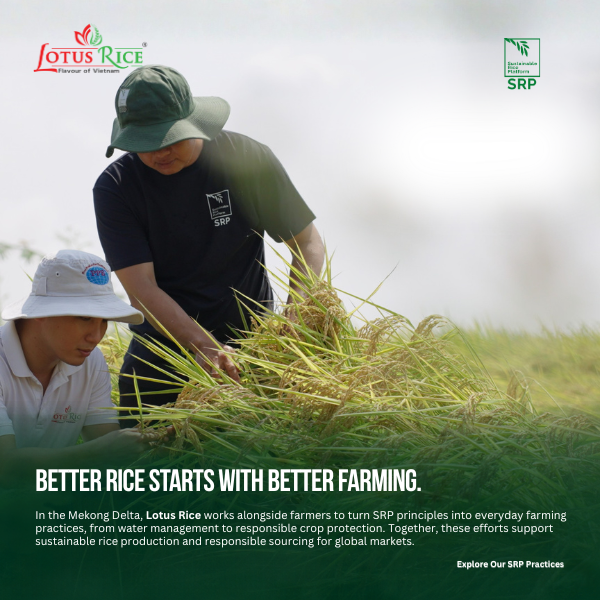
In the Mekong Delta, farmers observe crop development, manage water conditions, monitor pests, and assess grain maturity throughout each growing season. Their experience influences how rice is cultivated and the condition of the crop at harvest.
As environmental challenges and global sourcing requirements evolve, this knowledge becomes increasingly important. Responsible rice cultivation requires practical farming expertise supported by structured agricultural guidance, environmental awareness, and continuous improvement.
At Lotus Rice, participation in the Sustainable Rice Platform (SRP) supports this direction by connecting local farming knowledge with internationally recognized principles for sustainable rice production.
Farmer Expertise: Where Rice Quality Begins
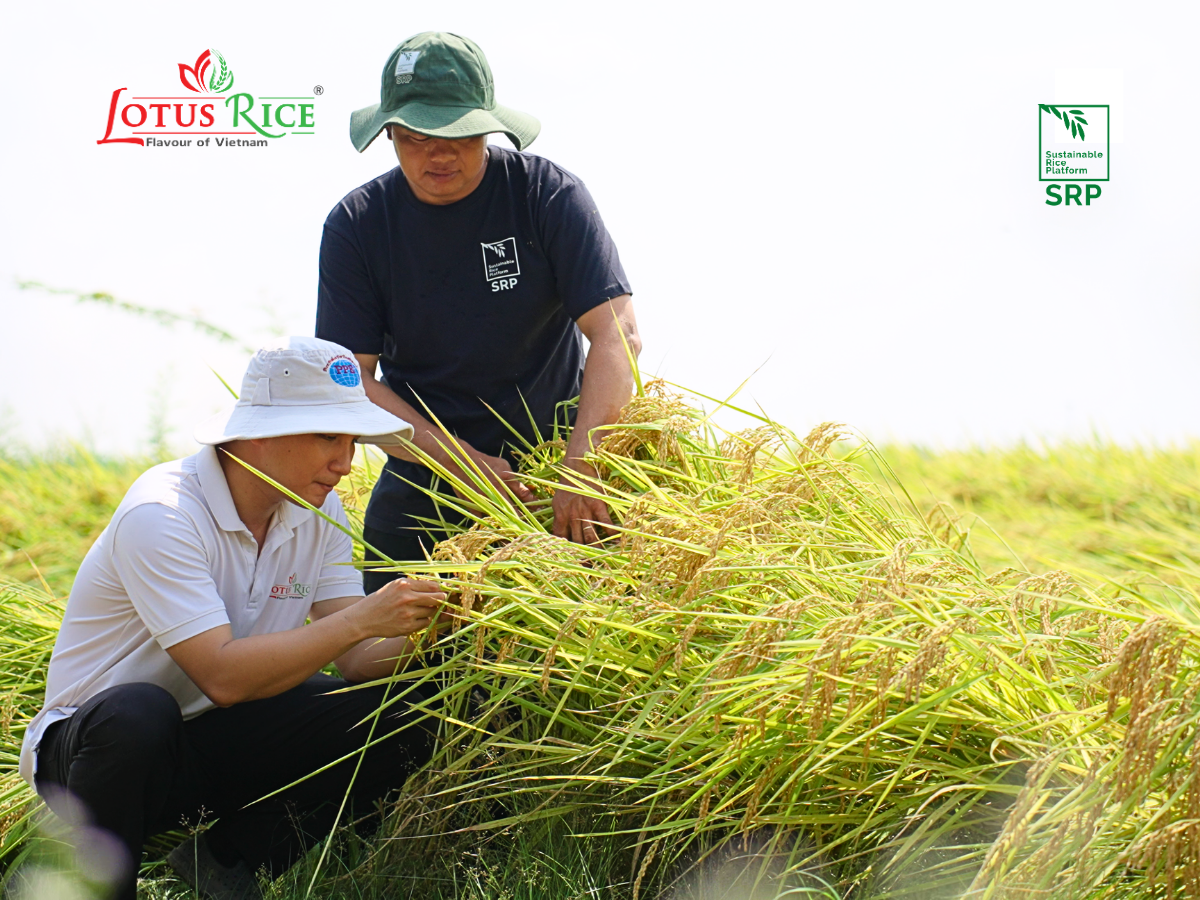
Rice cultivation involves more than a planting calendar. Farmers make decisions based on the conditions they observe throughout the season.
Reading the crop
Experienced farmers monitor plant growth, leaf conditions, and grain development to identify changes that may require attention. Regular field observation helps guide crop management decisions rather than relying on fixed assumptions.
Managing water conditions
Water availability and field conditions influence how rice develops. Farmers must consider rainfall, irrigation, drainage, and crop growth stages when managing water throughout the cultivation cycle.
Determining harvesting timing
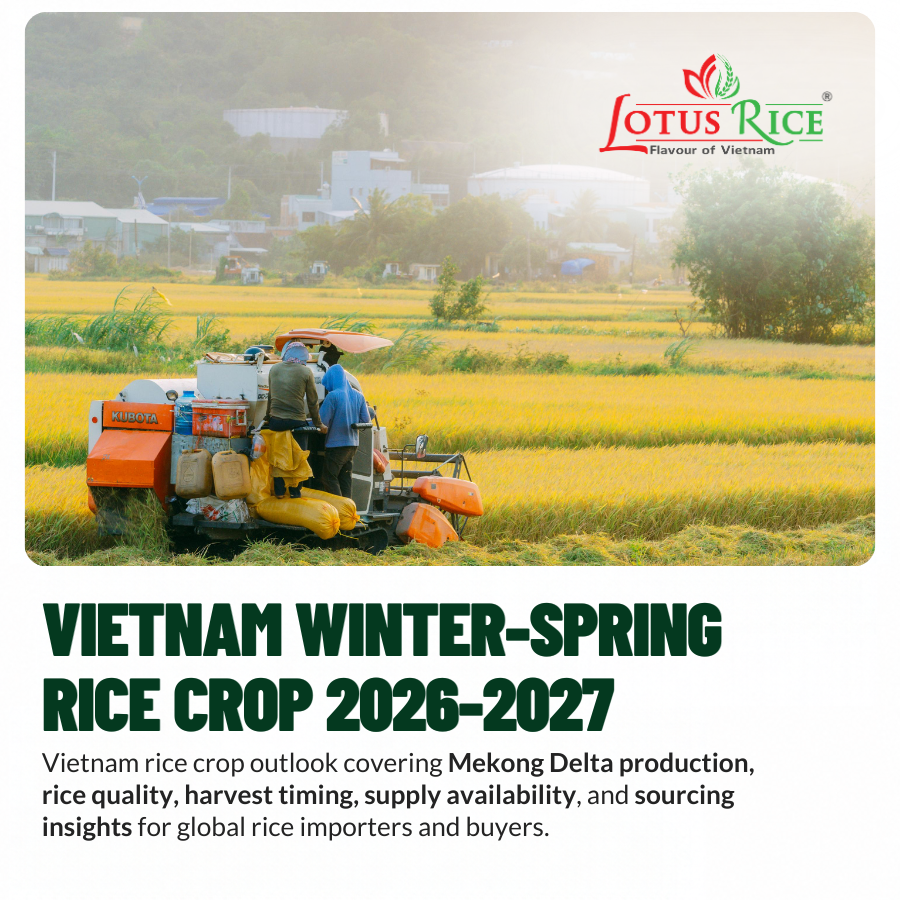
As rice approaches maturity, farmers assess grain development, field conditions, and weather patterns before harvesting. Appropriate timing helps protect the condition of the harvested grain before drying and processing.
These activities demonstrate why farmer expertise remains an important foundation of rice quality.
For international buyers, understanding this foundation provides greater context for how raw materials are produced before they enter the processing and quality-control stages.
How SRP Supports Responsible Rice Cultivation
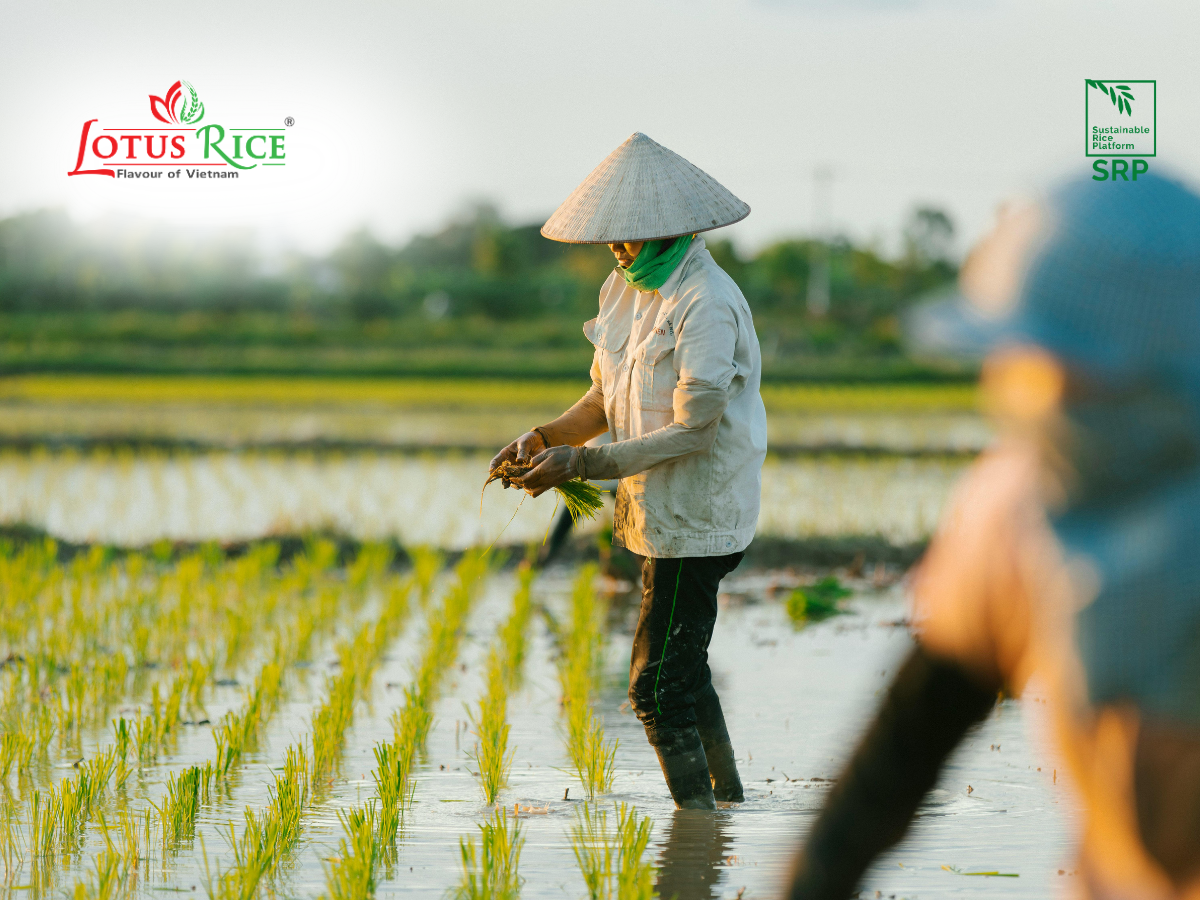
Traditional farming knowledge plays an essential role in agriculture, but responsible production also requires consistent practices and a framework for evaluating sustainability.
The Sustainable Rice Platform (SRP) provides a voluntary international sustainability standard for rice cultivation. Its requirements address farm management, water use, nutrient management, harvesting, worker safety, and other important aspects of agricultural production.
Through SRP participation, Lotus Rice works with farming communities in the Mekong Delta, providing technical support and training to encourage responsible agricultural practices.
Three practical areas help illustrate this approach.
Water management: making Informed Decisions in the Field
Rice cultivation depends on careful water management, particularly in regions where seasonal rainfall and growing conditions can change.
Within the SRP framework, water management involves evaluating how irrigation and drainage are handled, considering crop requirements, and encouraging more efficient resource use.
For farmers, this means combining observations of field conditions with technical guidance on water efficiency.
The objective is not simply to use less water, but to manage available resources responsibly while considering crop development and local agricultural conditions.
By including water efficiency in its farmer training activities, Lotus Rice supports greater awareness of resource management within the rice-growing communities it works with.
Integrated Pest Management: Monitoring before taking Action
Pest control is another area where practical experience and structured agricultural knowledge work together.
Farmers regularly observe crop conditions to identify potential pest problems. However, effective crop protection requires more than responding whenever insects or visible damage appear.
Integrated Pet Management (IPM) encourages farmers to assed pest pressure, consider available management methods, and select appropriate interventions based on actual field conditions.
This approach can include regular crop monitoring, preventive measures, and more considered use of crop-protection products.
As part of its SRP-related farmer training, Lotus Rice identifies IPM as a key area of responsible cultivation.
For agricultural communities, the value lies in strengthening decision-making and encouraging crop protection practices that consider both productivity and environmental responsibility.
Climate-smart Practices: Adapting knowledge to Changing Conditions
Farmers in the Mekong Delta operate within an agricultural environment influenced by seasonal weather, water availability, and changing growing conditions.
Local experience helps farmers understand these patterns. Climate – smart agricultural training provides additional knowledge for responding to evolving challenges.
Lotus Rice identifies climate-smart practices among the subjects covered through its SRP-related training activities.
These practices enable farmers to better understand environmental conditions, manage resources more sustainably, and make well-informed agricultural decisions.
Rather than replacing farmers’ experience, technical guidance can help them evaluate established methods against changing field requirements.
The combination of practical knowledge and structured training supports a more adaptable approach to rice cultivation.
Why Responsible Cultivation Matters to Global Rice Buyers
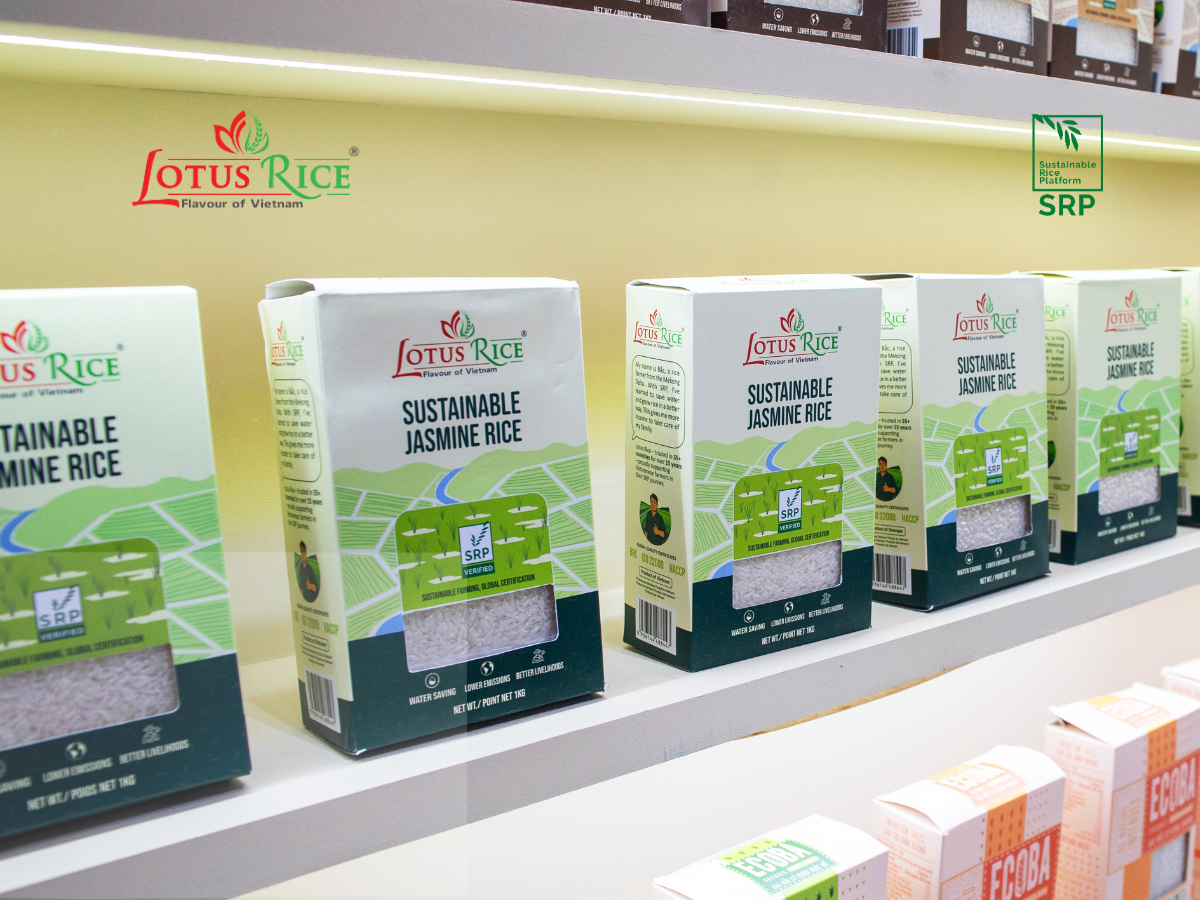
For international rice importers, responsible sourcing increasingly involves understanding how agricultural products are produced, not only evaluating their final specifications.
Product quality remains essential. Grain appearance, moisture levels, broken rice percentage, and cooking characteristics are important commercial considerations.
Yet these attributes represent only part of the supply – chain picture.
Responsible cultivation adds another dimension by drawing attention to farming practices, agricultural resource management, and the people involved in production.
For B2B buyers, three considerations are particularly relevant:
- Agricultural transparency: Greater understanding of cultivation practices and the farming activities associated with rice production.
- Sustainability alignment: A recognized framework for discussing environmental and social expectations with suppliers.
- Long-term sourcing relationships: Opportunities to work with suppliers that recognize farmer development and responsible agriculture as part of their sourcing approach.
SRP provides a common reference for these conversations. However, participation in the platform should be distinguished from independent verification of specific farms, products, or shipments.
Buyers evaluating sustainability claims should review the applicable documentation, verifications status and product scope with their suppliers.
Lotus Rice: Connecting Local expertise With Global Sourcing Needs

Bases in Vietnam’s Mekong Delta, Lotus Rice works with farming communities to connect agricultural knowledge with responsible rice production.
Its participation in SRP reflects an approach that extends attention beyond finished rice quality to the practices taking place during cultivation.
Technical guidance on water efficiency, integrated pest management, and climate-smart farming provides practical areas through which this work can be understood.
These activities sit alongside Lotus Rice’s broader sourcing and quality-management systems, which support the supply of Vietnamese rice to international markets.
For global partners, understanding the agricultural origin of rice and the practices behind its production is an important part of evaluating responsible sourcing opportunities.
Responsible Rice Begins with the People Who Grow It

Water levels must be monitored. Crop conditions must be assessed. Pest – management decisions must respond to actual field needs. Harvest timing must reflect grain maturity and weather conditions.
Each step depends on the knowledge and judgement of farmers.
When that expertise is supported by technical training and internationally recognized cultivation principles, responsible agriculture becomes a series of practical decisions rather than a broad sustainability statement.
For Lotus Rice, the connection between farmer knowledge and SRP-related practices represents an important part of its responsible sourcing direction.
Discover the people and practices behind the grain.
Explore Lotus Rice’s SRP commitment and connect with our team to discuss responsible Vietnamese rice sourcing solutions for your market.
Contact Lotus Rice: connect@lotusgroup.vn
————————————
Website: https://www.lotusrice.vn/
Email: connect@lotusgroup.vn
WhatsApp: (+84 77) 6996 768
Phone: (+84 28) 3622 2236
Head office: No. 52, Street 10, Him Lam Residence, Tan Hung Ward, HCM