Before rice becomes a trusted ingredient on global tables, it is shaped by people who know the land by heart.
In the Mekong Delta, rice farming is more than cultivation. It is a relationship between farmers, soil, water, climate, and generations of field experience. Every season teaches something different. Every field carries its own rhythm. Every harvest depends on decisions made long before the grain reaches the mill.
At Lotus Rice, we believe that responsible rice production begins in the field — with Vietnamese farmers, with nature, and with a system that helps turn local farming wisdom into globally trusted rice.
Where Farmers’ Knowledge Meets Responsible Practice
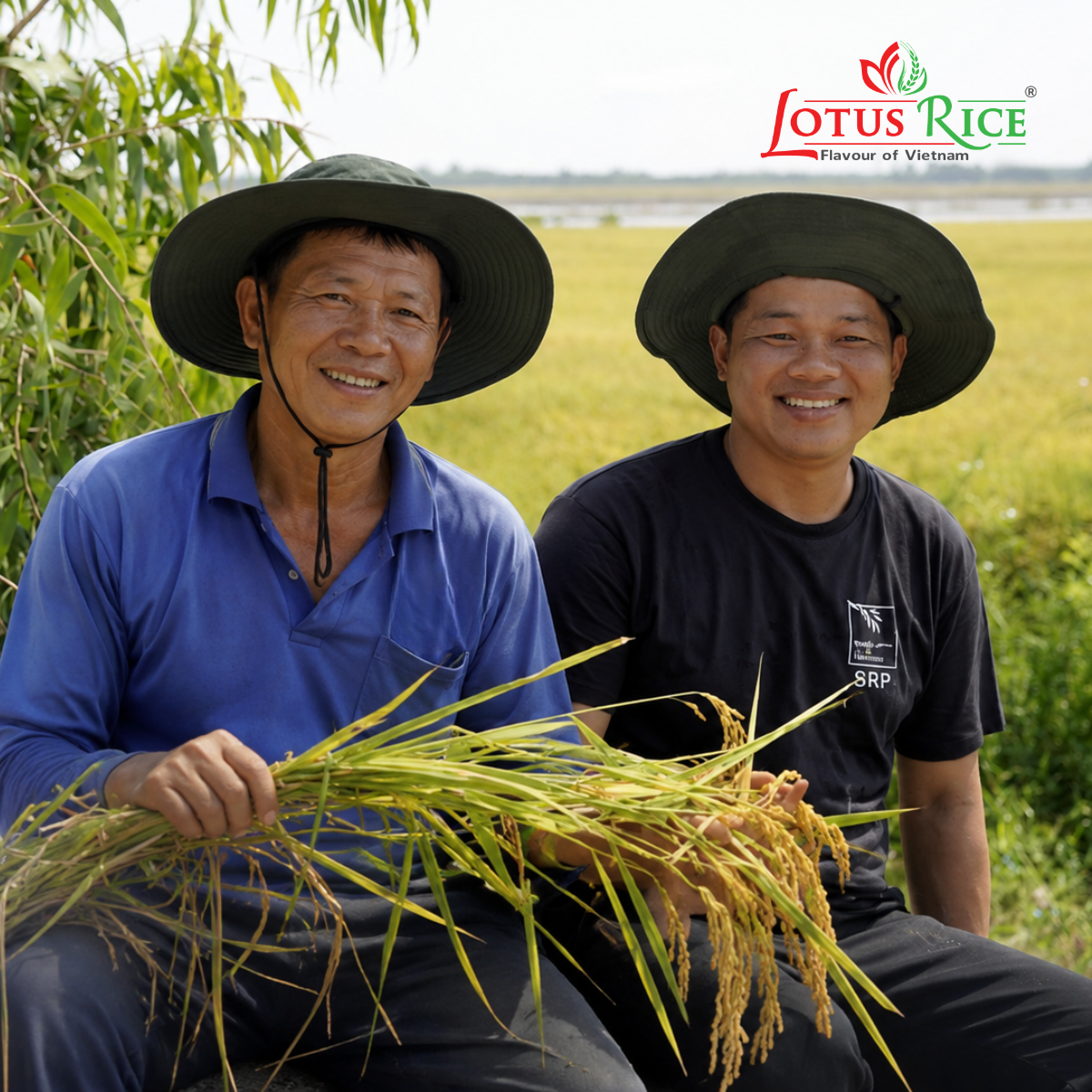
Vietnamese farmers hold practical knowledge that cannot be learned from theory alone.
They understand the soil beneath their feet. They know how water moves through the field. They recognize the rhythm of each season, the shift in climate, and the quite signals of the rice plant as it grows from seedling to harvest.
But today, sustainable rice requires more than experience. It also requires structure, training, traceability, and responsible standards that can support both farmers and global buyers.
SRP is not simply a farming method, nor is it just an alternative to conventional rice cultivation. It is a broader framework that encourages environmental responsibility, better resource management, social safeguards, and traceability throughout the rice production journey.
From seed selection to cultivation, from water management to harvest, SRP helps create a more responsible foundation for rice production.
For fields aligned with EU requirements, SRP can support rice that meets EU-related standards. Foe fields cultivated under US-compliant practices, SEP certification can support rice sustainable for US market requirements. When applied to organic-certified fields, SRP can further strengthen the sustainability credentials of Organic SRP-certified rice.
In short, SRP helps connect farming practice with market expectation-not only by improving how rice is grown, but also by making the journey of each batch more transparent and accountable.
Training Farmers for Better Fields and Better Futures
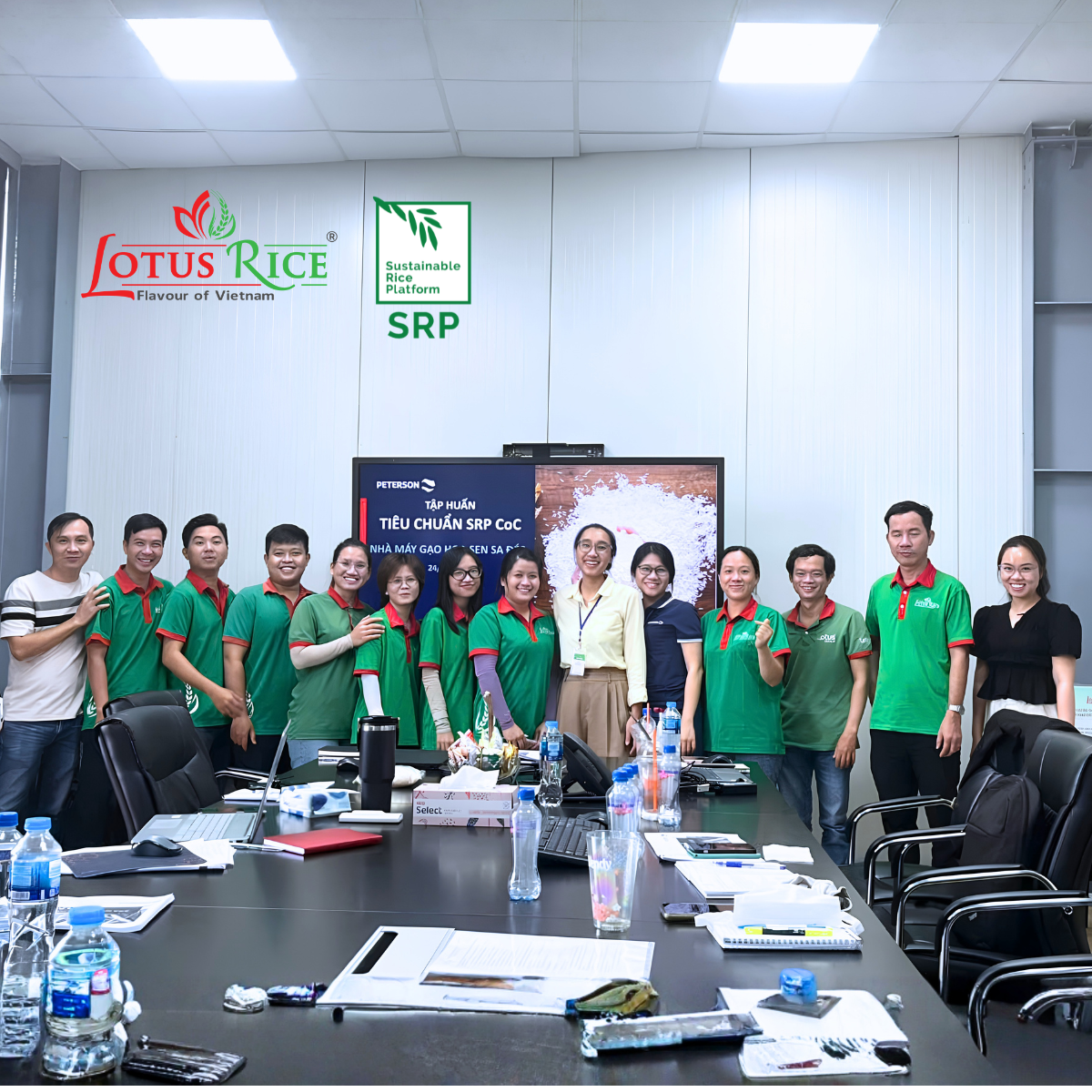
Sustainability is not happy with the statement. It happens through repeated actions in the field.
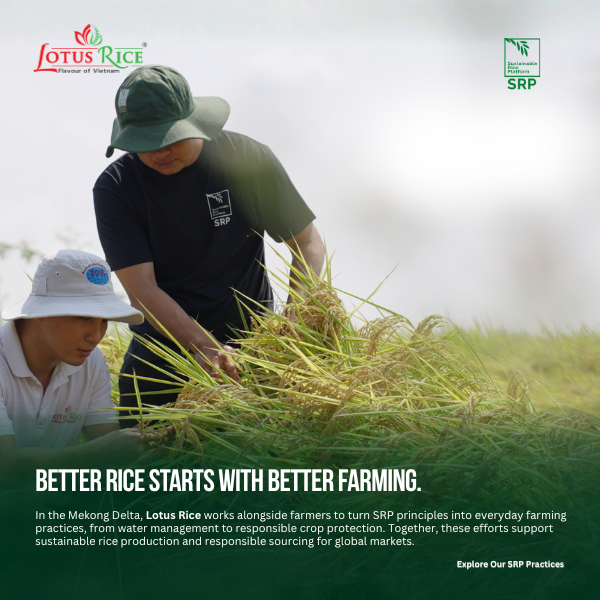
Within the SRP program, farmers receive training on climate- smart practices, water efficiency, and integrated pest management. These areas are essential because they directly influence both crop performance and environmental impact.
Better water management helps farmers use resources more carefully across growing cycles. Integrated pest management supports a more balanced approach to crop protection. Climate-smart practices help famers adapt to changing growing conditions with stronger awareness and better decision – making.
The result is not only better farming discipline. Farmers can also benefit from improved yield stability, input savings, and price premiums where market programs allow – all of which can contribute to better bet income.
For Lotus Rice, this matters deeply because responsible rice should not only protect the environment. It should also support the people who grow it.
Social Responsibility Is part of Rice Quality
A truly sustainable rice system cannot focus only on the field. It must also care about the people behind the harvest.
That is why SRP includes social safeguards designed to protect women, youth, and vulnerable groups. These safeguards help promote inclusive participation and ensure that farming communities are supported in a fair and responsible way.
The program also emphasizes the prevention of forced labor and child labor- because responsible rice production must be measured not only by the quality of the grain, but also by the integrity of the process behind it.
For Lotus Rice, this is an essential part of building long-term trust.
When rice reaches international markets, buyers are not only asking where the product comes from. They are also asking how it was grown, who was involved, and whether the production system reflects responsible values.
Traceability from Field to Export
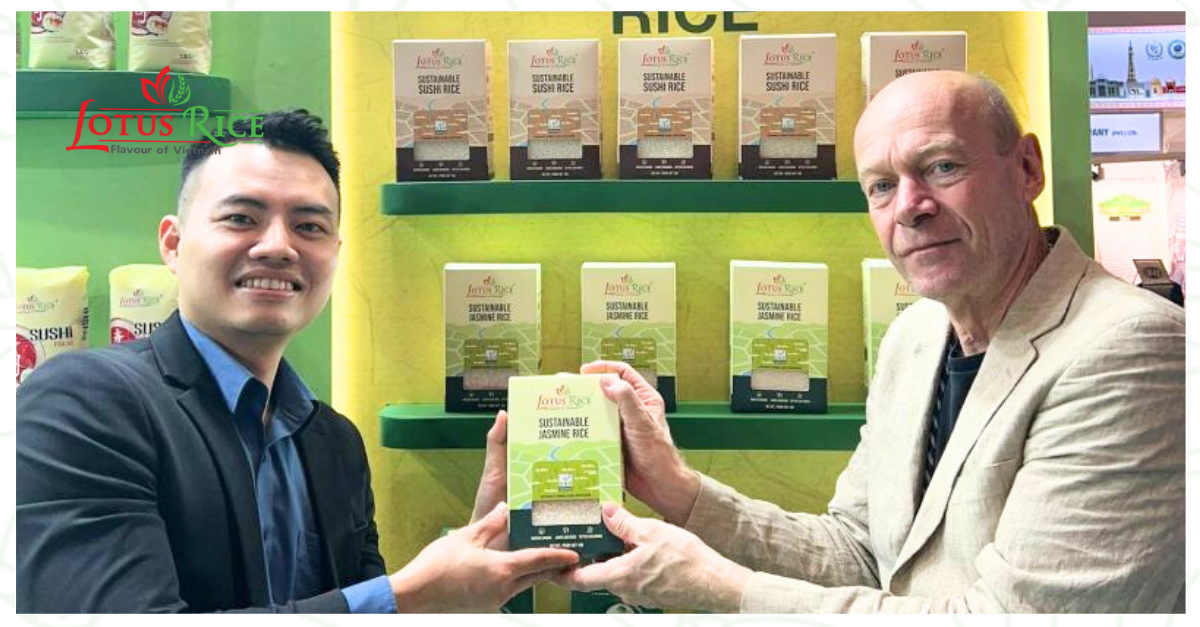
Trust becomes stronger when every step can be verified.
Each SRP batch can be traceable from field to export through Lotus’s internal Lotus Trace system and available QR or lot-code identifiers. This allows supply chain partners to verify the rice journey from farmer ID to packaged rice.
For consumer-facing products, traceability can also be supported through QR codes on packaging, where available. While SRP offers a traceability platform called RiceTrace mainly for supply chain partners, some SRP-verified products may integrate QR code systems that help buyers and consumers view farm-to-pack information.
This gives Vietnamese rice a stronger position in global markets.
Because today, quality is not only about the grain itself. It is also transparency accountability, and the confidence that every batch carries a clear story from the field to the final product.
Protecting the Future of Vietnam’s Rice Bowl
The Mekong Delta has long been known as one of Vietnam’s most important rice-growing regions. It is a place where land, water, and people have shaped the strength of Vietnamese agriculture for generations.
But this strength must be protected.
Changing climate conditions, water pressure, and environmental challenges are reminding the rice industry that the future of rice depends on how carefully we care for the land today.
For Lotus Rice, protecting the green environment of the Mekong Delta is not separate from producing rice. It is part of producing rice responsibly.
Every healthier field, every more efficient water practice, every better farming habit, and every more careful harvest contributes to a stronger future for Vietnamese rice.
Pride in Farmers. Pride in Vietnamese Rice
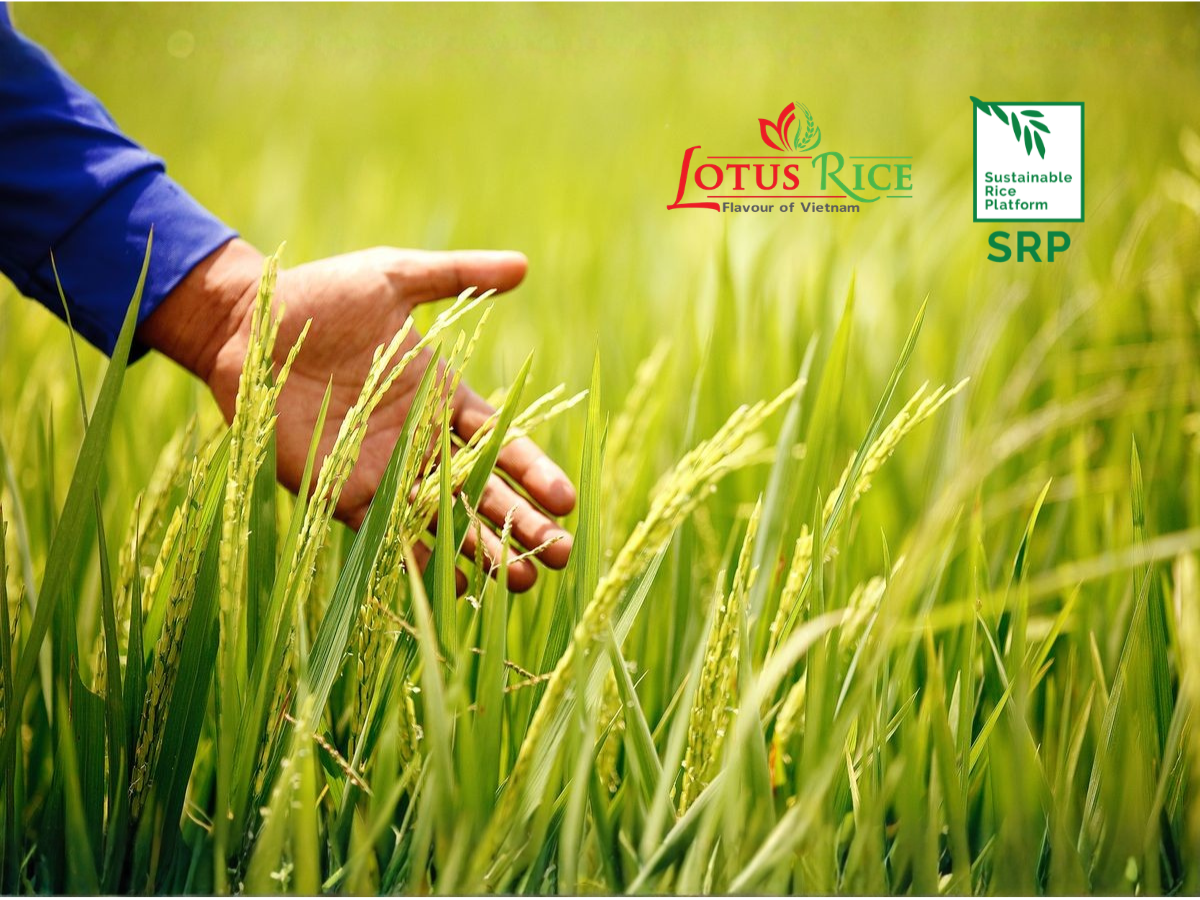
Lotus Rice is proud to begin with Vietnamese farmers — the people who turn natural resources into quality, and local knowledge into global value.
Their work carries more than agricultural skill. It carries patience, resilience, care, and pride in Vietnam’s rice heritage.
From the fields of the Mekong Delta to international markets, their dedication is present in every grain.
That is why our commitment is clear: to work with farmers, respect nature, strengthen traceability, and bring responsibly produced Vietnamese rice to partners around the world.
Because every grain of rice carries a bigger story.
It carries the care of the land.
It carries the knowledge of farmers.
It carries the responsibility of better farming practices.
And it carries the pride of Vietnam’s rice bowl.
Lotus Rice — Honoring farmers, protecting nature, and bringing trusted Vietnamese rice to global tables.
#LotusRice #VietnameseRice #SustainableRice #SRP #MekongDelta
————————————
Website: https://www.lotusrice.vn/
Email: connect@lotusgroup.vn
WhatsApp: (+84 77) 6996 768
Phone: (+84 28) 3622 2236
Head office: No. 52, Street 10, Him Lam Residence, Tan Hung Ward, HCM