Discover how Lotus Rice connects Mekong Delta sourcing, farming knowledge, quality control and a diverse portfolio to support global rice buyers.
From One Rice Region to Many Global rice Needs
Good rice can come from a place. Reliable sourcing comes from a system.
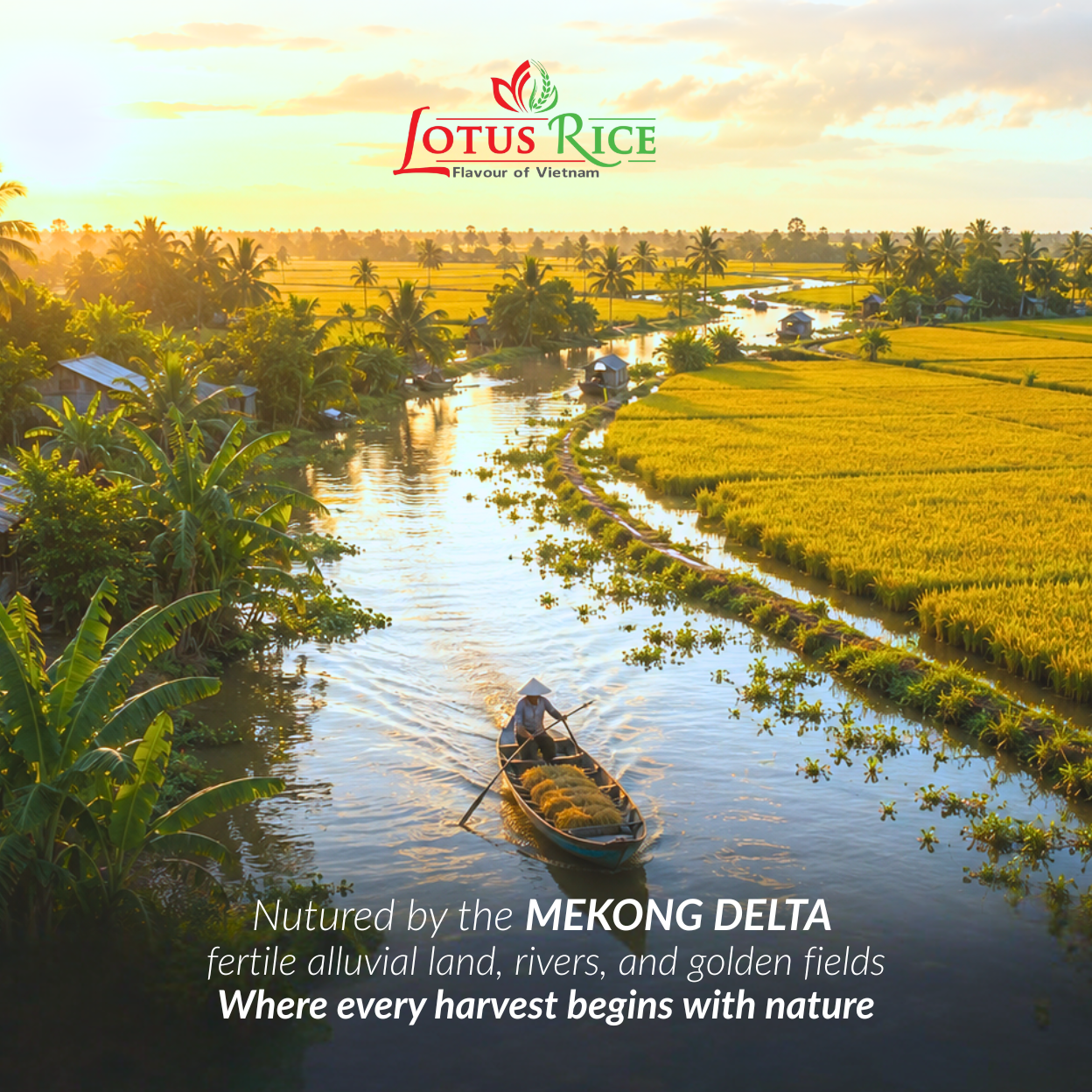
The Mekong Delta gives Vietnamese rice a strong natural foundation. Its growing conditions, water systems, and generations of farming experience support a diverse range of rice varieties for domestic and international markets.
For global buyers, however, origin is only the first consideration.
Importers, distributors, retailers, and foodservice businesses also need to evaluate product consistency, specifications, eating quality, packaging, and market fit. A strong origin story may begin a conversation, but a connected sourcing system is what supports a long-term rice program.
Lotus Rice turns the natural advantages of the Mekong Delta into a value system built around four connected layers: sourcing origin, farming knowledge, quality control, and a market-relevant rice portfolio.
Mekong Delta Sourcing Creates the Foundation
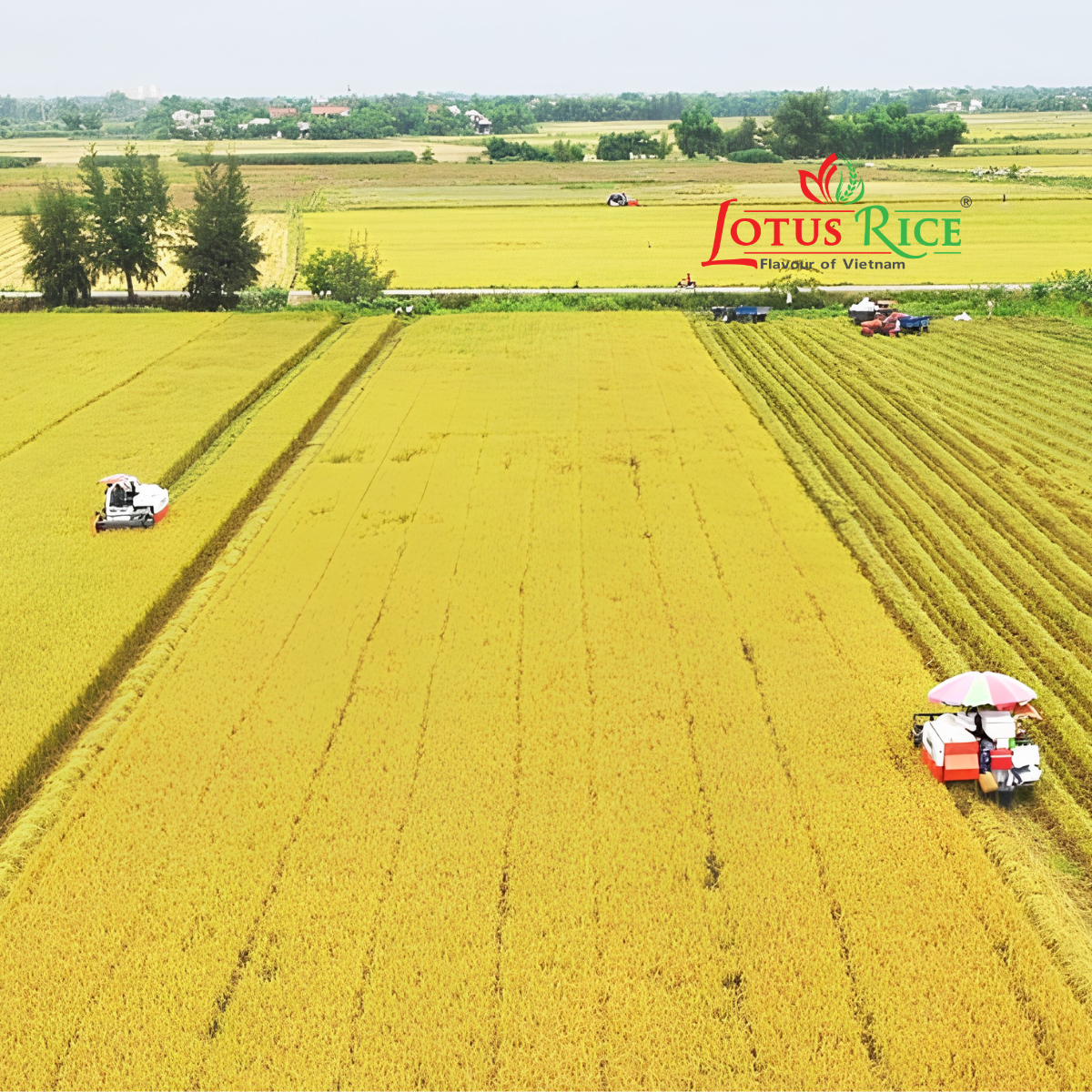
Origin Must Connect with Product Requirements
The Mekong Delta is more than a recognizable place on a product label. Its fertile soils, extensive waterways and diverse growing conditions provide a foundation for cultivating different Vietnamese rice varieties.
Lotus Rice works with selected sourcing areas across the region. The objective is not simply to purchase rice where it is available, but to connect growing conditions and rice varieties with the intended product requirements.
This relationship between origin and product fit is important because different rice programs require different characteristics. A premium fragrant rice, an everyday long-grain product and a rice designed for a specific cuisine may not begin with the same sourcing considerations.
For buyers, the value of origin therefore lies in its relevance to the final product – not only on the name of the region.
Farming Knowledge Shaped Quality Before Processing
Good Rice Begins in the Field
Rice quality cannot be created entirely inside a factory. Variety selection, crop development, field observation and harvest decisions all influence the grain before processing begins.
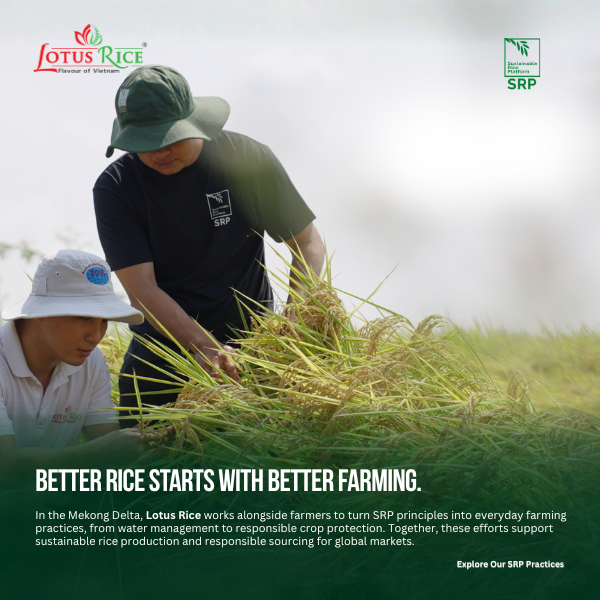
The Lotus Rice value chain combines the agricultural knowledge of Mekong Delta farming communities with cooperation, technical guidance, and defined growing practices.
This local knowledge has been shaped over generations. Farmers understand how rice responds to water, weather, and seasonal conditions. When that experience is connected with clearer product and market expectations, it creates a stronger foundation for quality.
Lotus Rice cooperates with farmers across Mekong Delta growing areas and provides guidance related to cultivation requirements. This connection helps bring field-level decisions closer to the specifications expected by buyers.
For international sourcing partners, that means quality is considered from the beginning rather than inspected only at the end.
Quality Control Protects Product Consistency
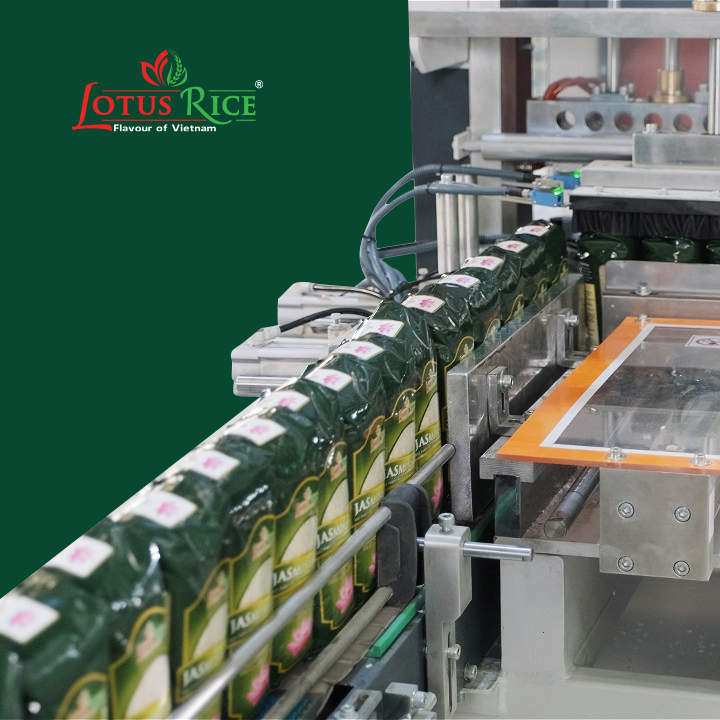
Every Stage Addresses a Different Risk
Good raw material can still lose value if is not managed carefully through processing, packing and loading.
Within the Lotus Rice value chain, rice moves through a series of defined stages, including pre-cleaning, cleaning, destoning, whitening, polishing, length grading and colour sorting.
Cleaning and destoning help remove foreign matter and impurities. Length grading separates broken grains from whole grains, while colour sorting removes damaged, yellow, or discolored kernels.
After processing, automatic packing and metal-detections systems support the preparation of finished products. In-house loading provides greater control as rice moves from packing to shipment.
No individual stage can guarantee consistency on its own. Their value comes from working as a connected process.
This distinction matters to B2B buyers. A sample may demonstrate the potential of a product, but repeat orders depend on the supplier’s ability to protect grain appearance, specifications and overall product quality across shipment.
Lotus Rice’s official value-chain information explains how these stages connect from cultivation and processing to packing, and distribution. Explore the Lotus Rice value chain (Chen link)
A Diverse Portfolio Creates Better Market Fit
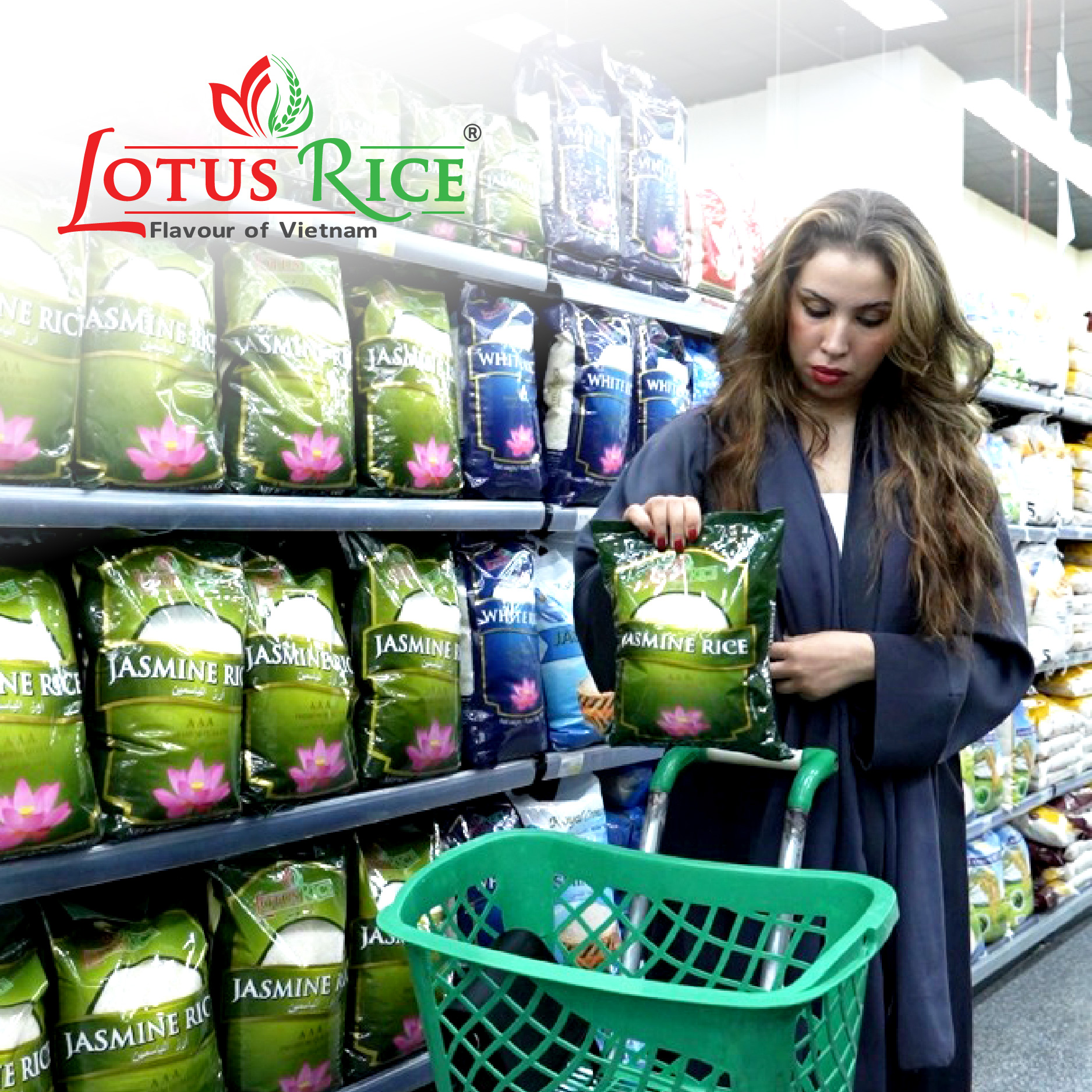
Different Markets need Different Rice
There is no single rice variety that fits every cuisine, consumer preference of commercial position.
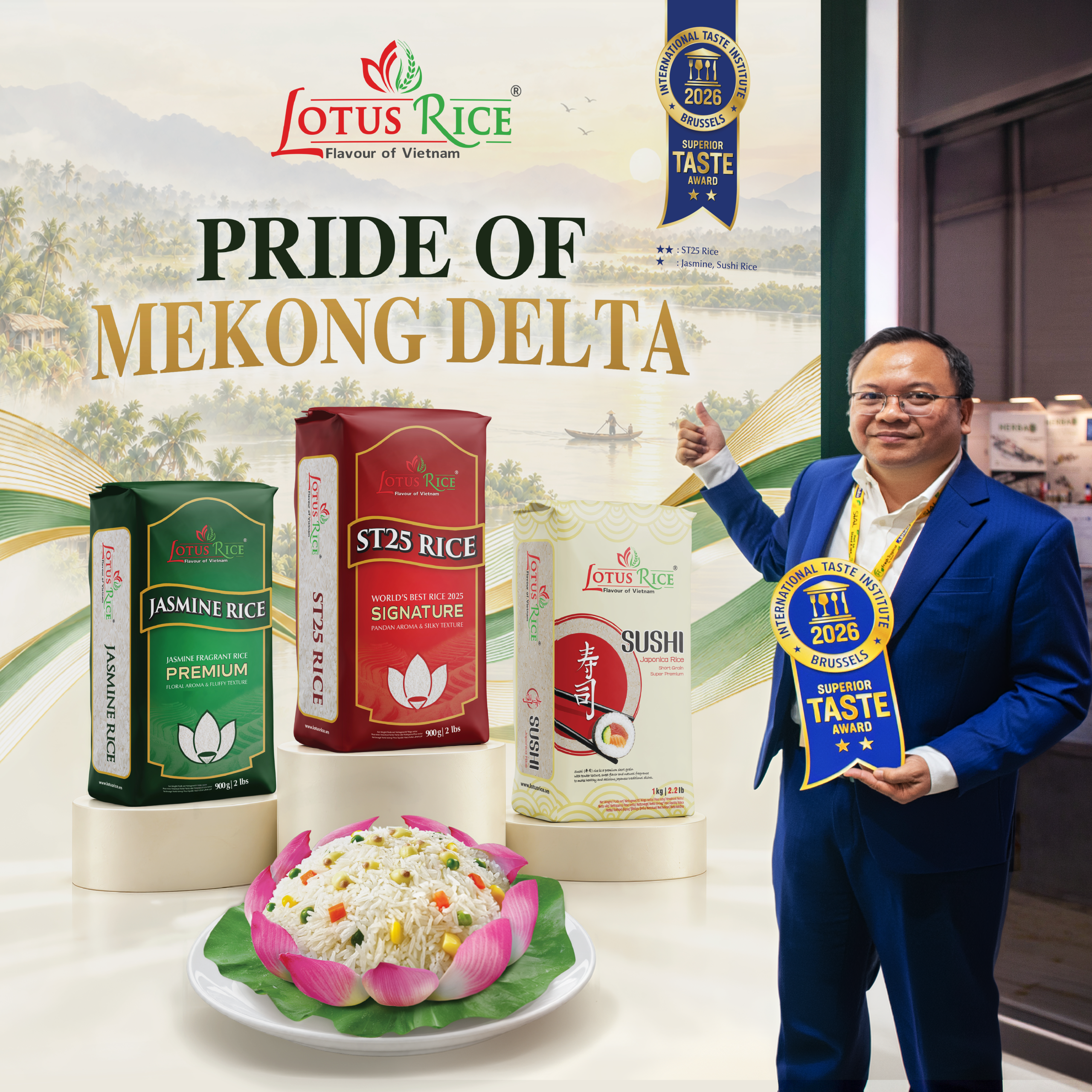
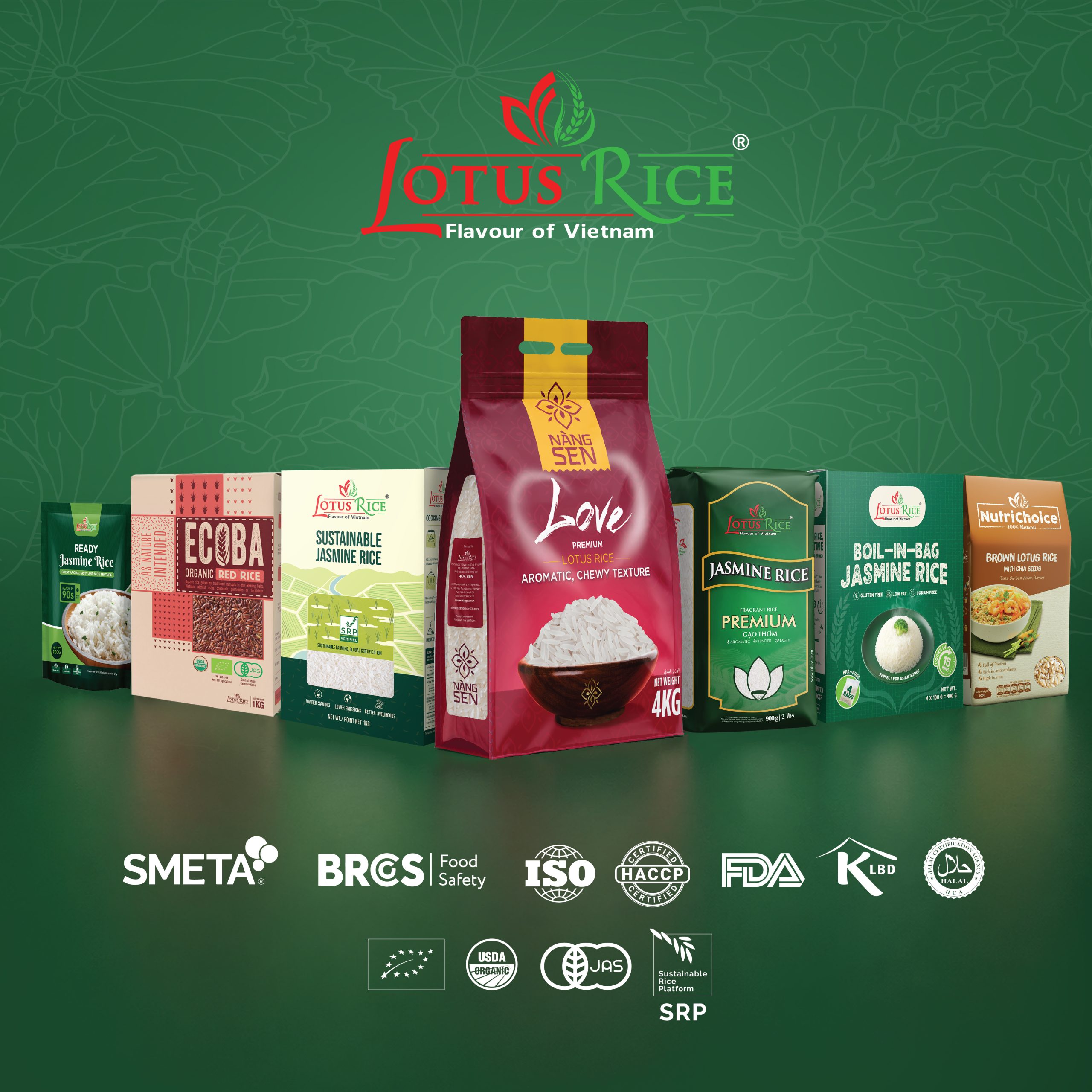
Some markets are familiar with the fragrance and soft texture of Jasmine Rice. Premium buyers may look to ST25 for its long, slender grains, refined aroma and distinctive eating experience. Japonica serves cuisines that require a softer and sticker short- grain profile, while White Rice ang Glutinous Rice support different everyday and specialty applications.
Organic and SRP rice solutions add future options for buyers developing products around organic certification or responsible sourcing directions.
A diversified portfolio allows sourcing decisions to begin with the market rather than with product availability alone. Buyers can consider the expected eating experience, target consumer, culinary application and price position before selecting a suitable rice variety.
This is where Lotus Rice moves beyond the role of a conventional rice exporter. The business value lies not only in supplying rice, but also in connecting different product options with different market requirements.
Lotus Rice currently supports partners across more than 60 countries and serves needs ranging from mainstream products to premium, specialty and responsible rice categories. Discover the Lotus Rice portfolio for global buyers.
More than Origin: A connected Rice sourcing System
Reliable rice sourcing depends on how well four elements work together.
The right origin provides a strong natural foundation. Farming knowledge shapes the grain before processing. Quality control protects the product throughout production and preparation. A diverse portfolio connects the final rice with the needs of the target market.
Together, these layers turn the advantages of the Mekong Delya into practical value for global buyers.
This is the Lotus Rice value system: a connected approach that moves from the field to processing, from product development to international markets.
From one rice region to many global rice needs.
Strengthen Your Global Rice Sourcing Strategy
Looking for a Vietnamese rice supplier that can support more than product availability?
Lotus Rice works with international partners to identify suitable rice varieties, specifications and packaging solutions based on their target markets and sourcing requirements.
Learn how Lotus Rice can support your global rice sourcing strategy.
LotusRice VietnameseRice RiceProcessing QualityControl RiceSourcing FoodSafety B2BRice
————————————
Website: https://www.lotusrice.vn/
Email: connect@lotusgroup.vn
WhatsApp: (+84 77) 6996 768
Phone: (+84 28) 3622 2236
Head office: No. 52, Street 10, Him Lam Residence, Tan Hung Ward, HCM