Learn how B2B buyers can choose Vietnamese rice based on texture, aroma, taste, cooking application, channel and sourcing requirements.
How to Choose the Right Vietnamese Rice for your Market
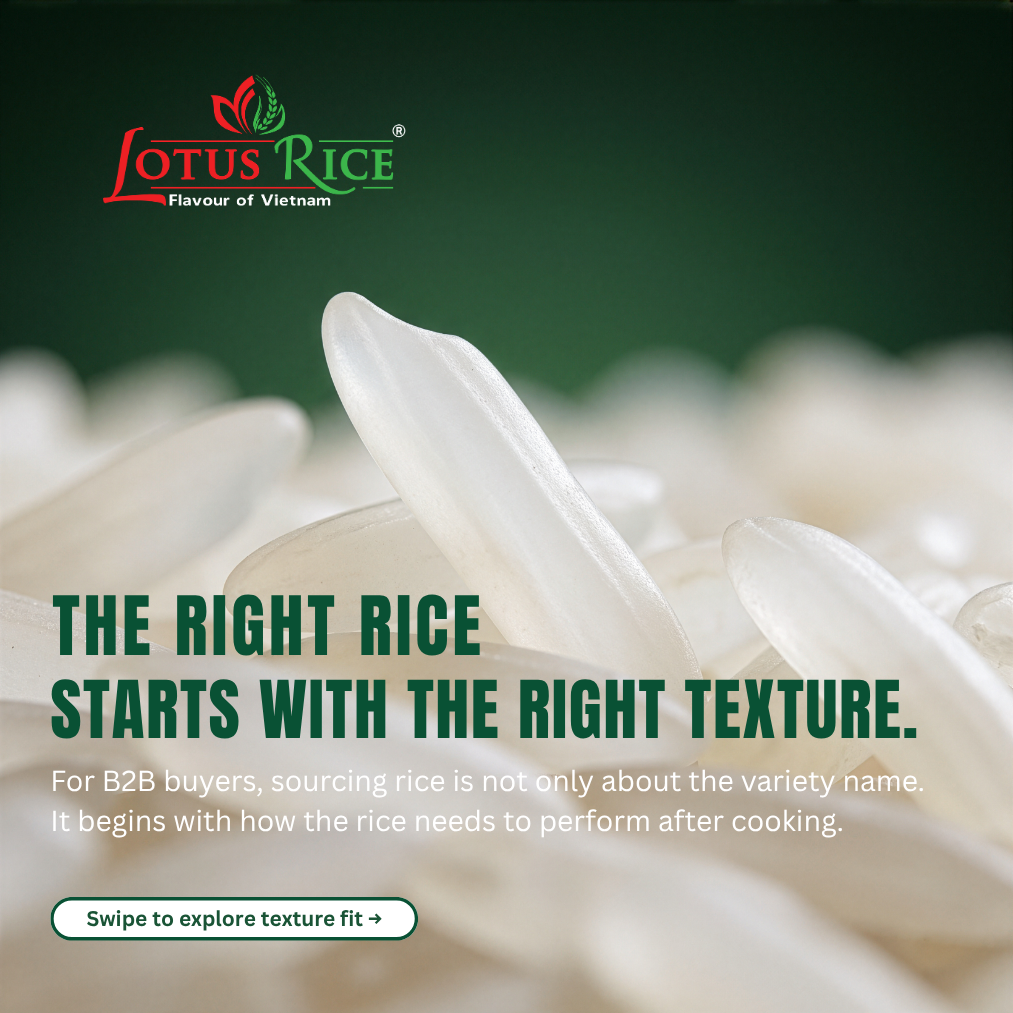
The best rice is not the most experience variety. It is the one that fits the market.
A premium variety can still be the wrong choice if its texture does not suit local dishes. AN aroma rice may perform well in retail but not match the cooking requirements.
How to choose the Right Vietnamese Rice for your Market.
The best rice is not the most expensive variety. It is the one that fits the market.
A premium variety can still be the wrong choice if its texture does not suit local dishes. An aromatic rice may perform well in retail but not match the cooking requirements of a foodservice customer. And a technically strong product can still struggle if it does not meet the expectations of the consumer who eventually eats it.
For B2B rice buyers, the real sourcing question is therefore not “Which variety is best?”
It is “Which rice experience is right for my consumer, channel and application?”
That shift matters because every market has its own expectations of rice texture, aroma, and cooking performance. Lotus Rice identifies these characteristics, together with product positioning and sourcing requirements, as important considerations when selecting rice for different markets.
Choosing Vietnamese Rice Starts with the Market.
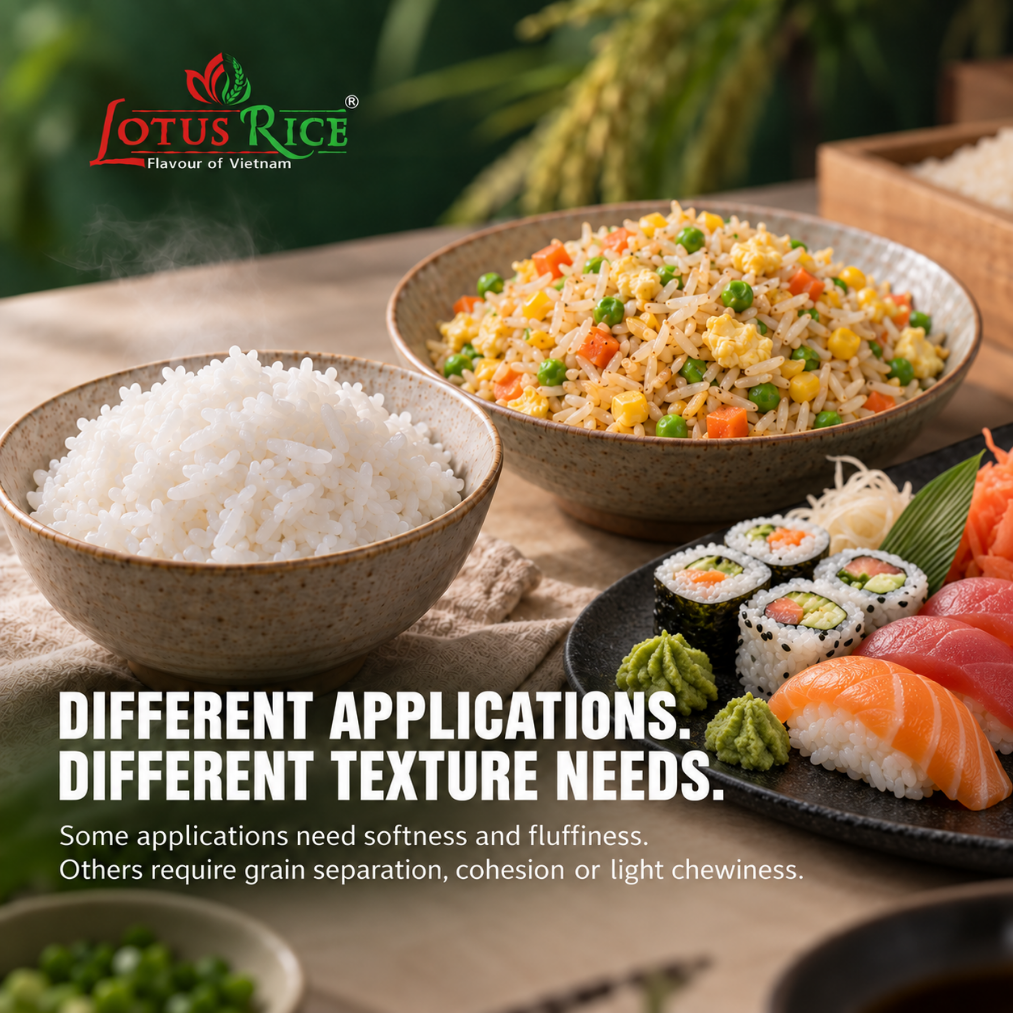
When building a rice portfolio, buyers should work backwards from the market rather than forward from a variety list.
The decision begins with three connected questions: Who is the target consumer? How will the rice be used? What eating experience should the product deliver?
One these are clear, variety selection becomes much more practical.
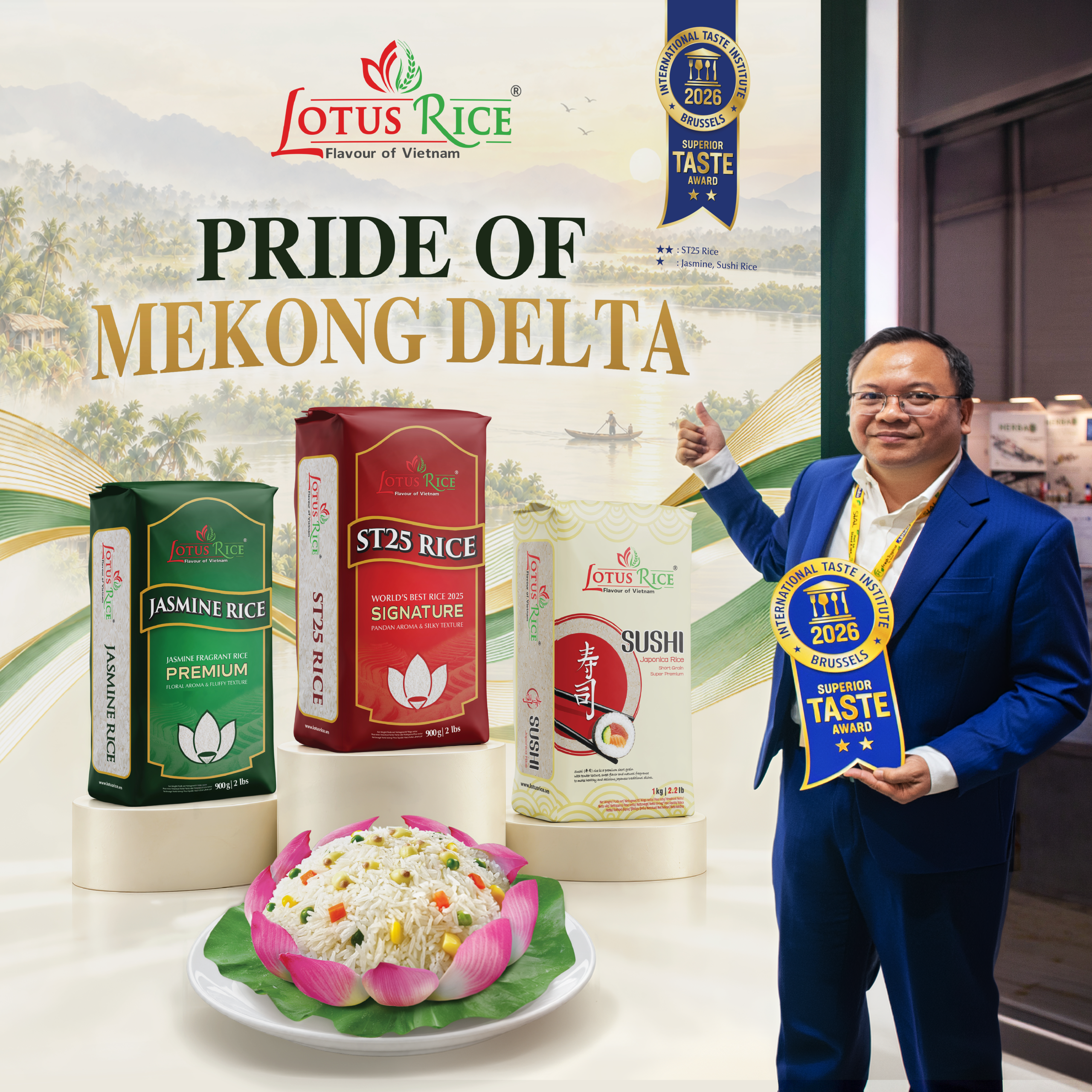
For consumers who expect softness and natural fragrance, Jasmine offers a familiar profile suited to everyday retail, foodservice and private-label programmers. Lotus Rice describes its Jasmine Rice as long- grain rice with natural aroma and a soft texture after cooking.
Where the application requires fluffy rice with stronger grain separation, White Long Grain provides a more relevant direction, particularly for dishes and channels where separated grains and dependable cooking performance matter.
For sushi, rice bowls and Japanese-style applications, the requirement changes again. Japonica/Sushi Rice is characterized by a soft, sticky and cohesive texture, allowing the cooked grains to hold together rather than remain fully separated.
And when the commercial proposition is built around a more distinctive premium eating experience, ST25 brings another sensory profile: delicate aroma, soft texture, light chewiness and subtle natural sweetness. These characteristics support premium retail, specialty and restaurant positioning where the rice itself needs to contribute more strongly to the overall product experience.
Texture, Aroma, and Taste Should Lead to Commercial Fit.
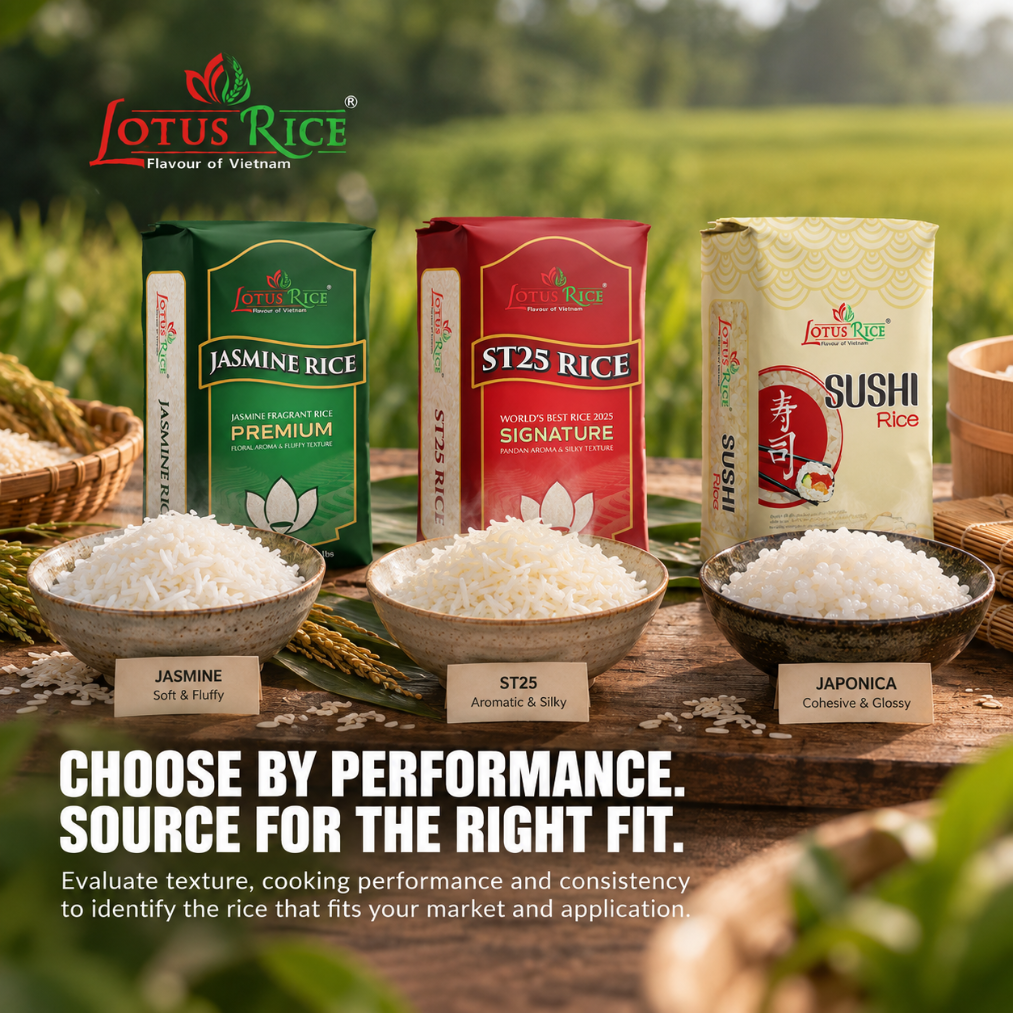
This is why comparing rice only by price, grain length or variety name can miss the bigger commercial picture.
A buyer developing a mainstream family range may priorities familiarity and versatility. A restaurant supplier may care more about cooking behaviour, and consistency. A premium retailer may look for a stronger sensory story, while another customer may need responsible sourcing credentials as part of the portfolio brief.
In the latter case, Organic and SRP Rice provide additional sourcing directions rather than simply additional varieties. Lotus Rice positions these solutions within a responsible rice portfolio designed around market fit, quality and sourcing expectations.
The selection framework therefore becomes:
Consumer expectation -> Cuisine & Applications -> Texture -> Aroma & Taste -> Channel -> Positioning -> Sourcing requirements.
This is a more useful way to build a rice portfolio because each product has a clear commercial role.
Jasmine for soft and aromatic propositions. White Long Grain for fluffy, separated grains. Japonica/ Sushi for moist, cohesive applications. ST25 for a differentiated premium sensory profile. Organic/ SRP when responsible sourcing forms part of the market requirement.
The Right Rice Is the One Your Market Is Ready For
There is no single Vietnamese rice variety that is right every market.
The stronger portfolio is bult by matching what consumers wants to eat with what the channel needs to sell and what the application requires the rice to do.
That is where product- market fit begins.
Planning a new rice range or reviewing your current portfolio?
Share your target market, sales channel, application and desired rice profile with Lotus Rice.
Let’s identify the Vietnamese rice that fits your market – before you commit to the variety.
#LotusRice #VietnameseRice #RiceSupplier #RiceExporter #B2BRice #RiceSourcing