Understand Vietnam rice crop seasons, harvest timing, and Mekong Delta conditions to make better rice sourcing and supply-planning decisions.
Vietnam’s Rice Crop Seasons: What Buyers Should Understand Before Sourcing
Before choosing the rice, sourcing often begins with specifications: variety, grain length, moisture, broken percentage, aroma, texture and cooking performance.
But those specifications tell only part of the story.
Long before rice reaches the processing line, the crop has already developed through a season shaped by water, weather, soil conditions and decisions made in the field.
This is why understanding Vietnam rice crop seasons can give importers, distributors, retailers and private-label buyers useful context when planning their sourcing.
Why Crop Season Matters in Vietnam Rice Sourcing
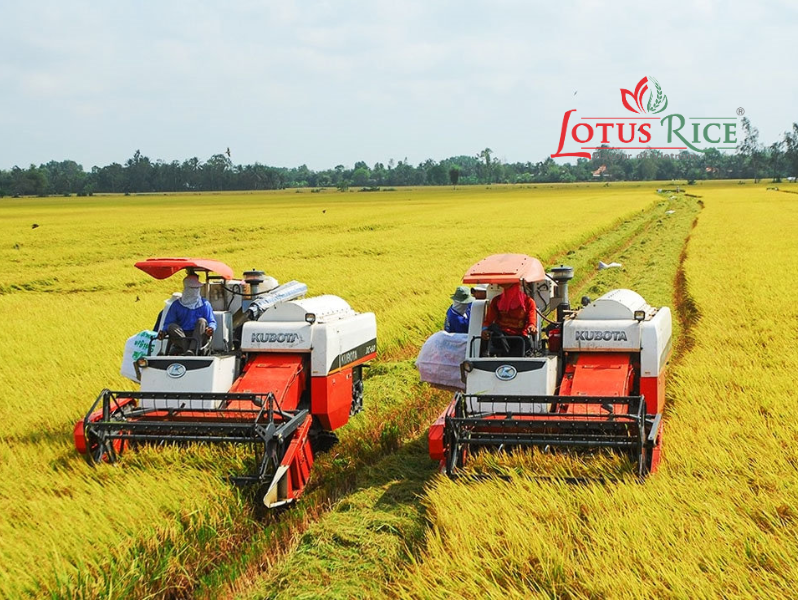
A crop season is more than a planting and harvesting schedule.
Throughout the growing cycle, farmers observe how the crop responds to changes in water, weather and field conditions. As harvest approaches, those observations become particularly important.
Harvest readiness is not determined by the calendar alone.
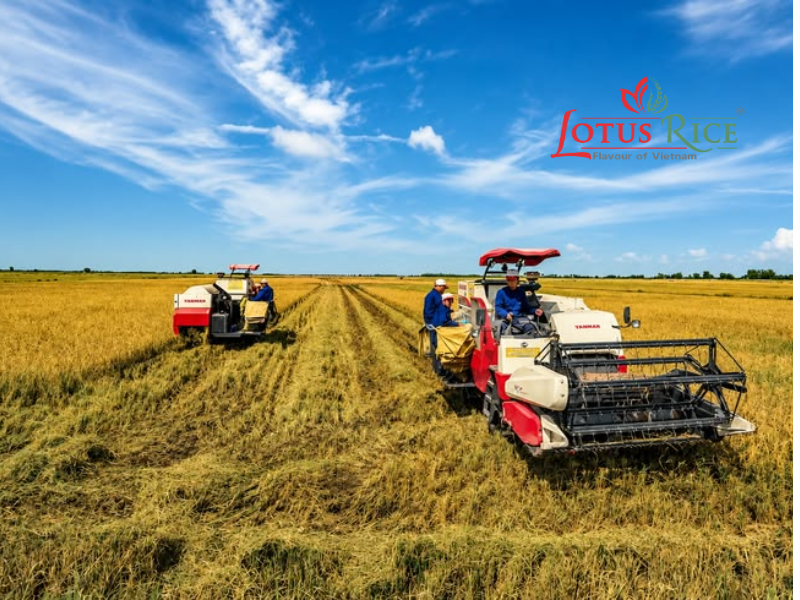
The International Rice Research Institute (IRRI) identifies grain maturity and moisture content among the indicators used to determine appropriate harvest timing. Harvesting too early can result in more immature grains and greater breakage during milling, while harvesting too late may also increase losses and breakage.
For buyers, this creates an important connection:
Seasonal conditions → harvest decisions → raw-material condition → processing and quality management.
The crop season does not replace specifications or quality control. It provides additional context for understanding how the raw material arrived at those specifications.
Understanding the Main Rice Seasons in the Mekong Delta
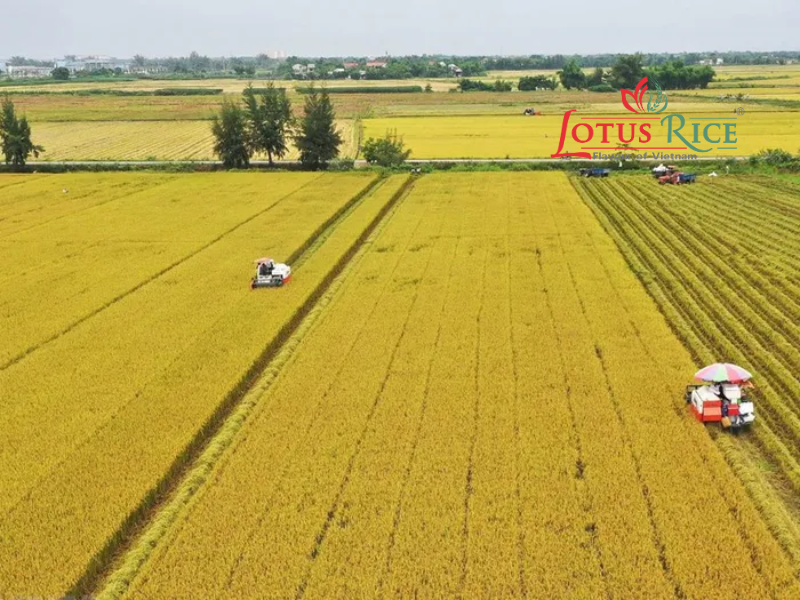
The Mekong Delta can support multiple rice crops during the year. Lotus Rice identifies Winter–Spring, Summer–Autumn and Autumn–Winter as three important seasonal cycles, each developing under different environmental conditions.
Crop calendars should always be understood as approximate rather than fixed. Planting and harvesting periods can vary by locality, weather conditions, water availability, and the development of the crop itself.
Winter–Spring: A Relatively Stable Growing Window
Winter–Spring generally develops under more stable conditions than the wetter parts of the year.
FAO reported in February 2026 that Vietnam’s Winter–Spring paddy crop is largely irrigated and accounts for approximately 45% of national annual rice production, highlighting the importance of this season within the country’s rice supply.
But greater seasonal stability does not remove the need for field observation.
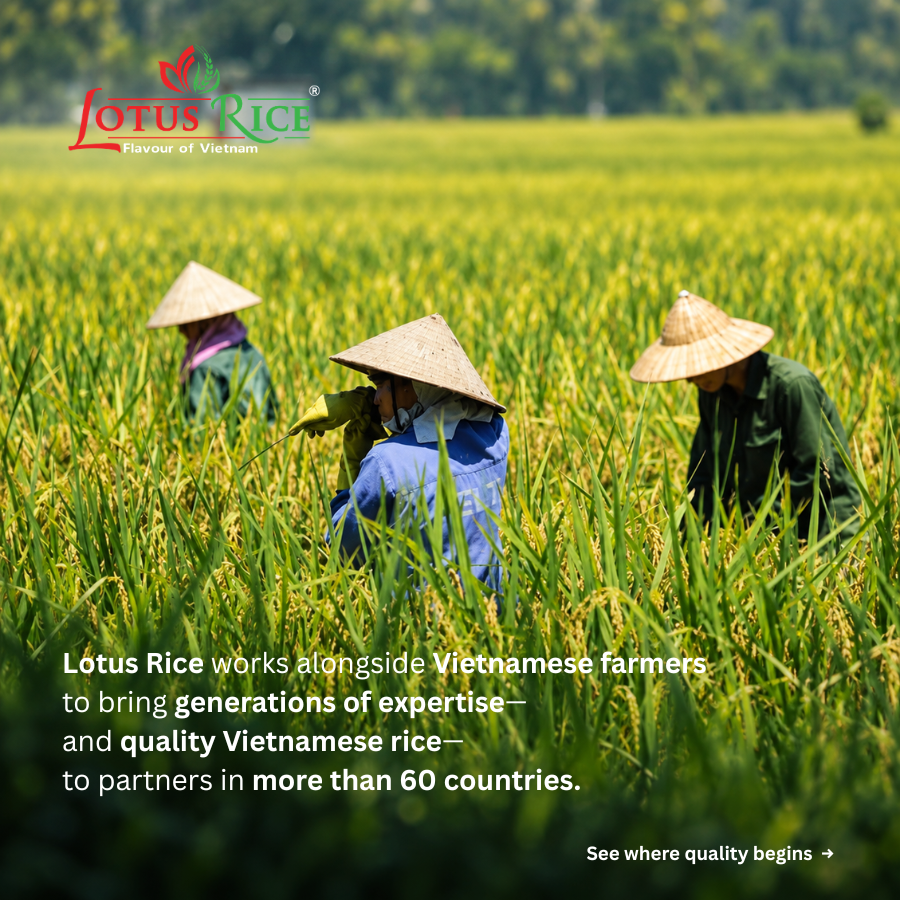
Farmers still monitor crop development, grain maturity, moisture, and weather as harvest approaches. The field — not simply a predetermined date — indicates when the crop is ready.
Summer–Autumn: When Weather Makes Timing More Critical
As rainfall increases, the relationship between crop maturity and weather becomes more complex.
Farmers may need to consider both the condition of the grain and the weather expected during the harvest window. Lotus Rice notes that changing rainfall conditions during Summer–Autumn make observation and timing especially important.
This matters beyond harvesting itself.
Freshly harvested paddy contains significant moisture, and IRRI recommends timely drying because delays can lead to deterioration, discoloration or other quality losses.
For buyers, seasonality therefore connects not only to when the crop is harvested, but also to how effectively post-harvest handling can begin.
Autumn–Winter: Reading the Crop Together With Water Conditions
Autumn–Winter develops within another seasonal context.
In parts of the Mekong Delta, surrounding water levels and the wider flood cycle can influence field conditions. Farmers therefore need to read the crop together with changes in the surrounding environment rather than apply exactly the same approach used in another season.
This ability to adapt is an important part of Vietnamese farming knowledge.
Experience is not simply repeating what worked in the previous crop. It is knowing what to observe, what has changed and when to respond.
Harvest Timing Is Where Farmer Knowledge Becomes a Quality Decision
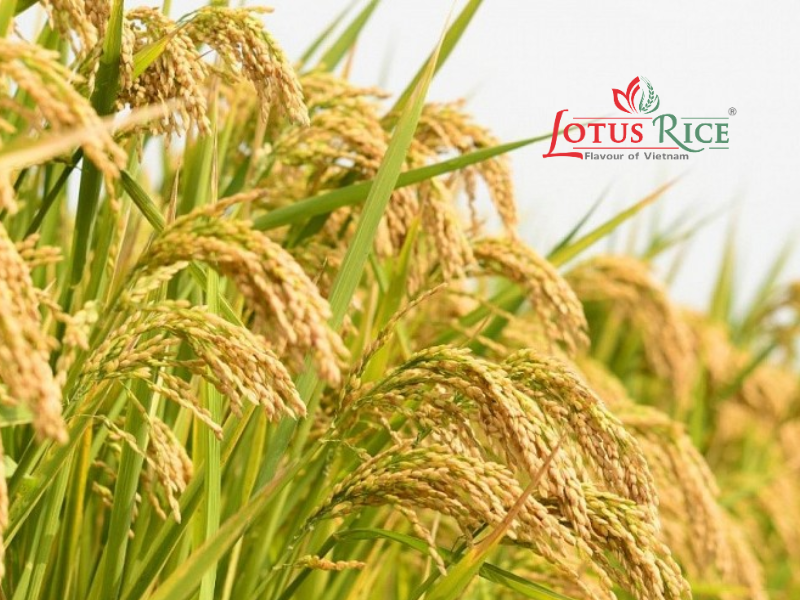
One of the most important moments in the crop cycle is deciding when to harvest.
IRRI notes that paddy quality is influenced by several factors, including variety, weather during production, soil conditions, cultivation practices, harvesting and post-harvest management.
That is why farmers form the first link in the quality chain.
At Lotus Rice, farmer knowledge and field observation provide the agricultural foundation. Processing and quality controls then continue that journey through stages such as cleaning, grading, milling, sorting and preparation according to buyer requirements.
One stage cannot completely compensate for another.
Good processing needs good raw material to work with, while good raw material still requires professional processing and quality management before reaching the market.
What Should B2B Rice Buyers Ask About Crop Season?
Understanding seasonality does not mean buyers need to become agronomists.
It means asking better sourcing questions.
Before confirming a rice programme, consider:
- Which crop season does this lot come from?
- What field and weather conditions shaped the harvest?
- How was harvest readiness evaluated?
- What grain and cooking characteristics does the finished product need to achieve?
- Does the expected harvest and processing window align with the required sourcing timeline?
These questions help move the sourcing conversation beyond simple availability.
They connect origin, crop conditions, product performance and supply planning.
From Crop Calendar to Better Supply Planning
For a B2B buyer, the crop calendar should not be treated as a fixed promise of quality or availability.
It is better used as a planning framework.
Knowing when crops are developing and when harvest windows are approaching can help buyers begin discussions earlier, define specifications more clearly and coordinate sourcing requirements with expected market timing.
It also allows suppliers and buyers to discuss the actual crop conditions rather than make assumptions based solely on historical calendars.
That distinction becomes increasingly important as weather patterns and growing conditions continue to change.
Lotus Rice: Connecting the Field With Market Requirements
Lotus Rice works with farming communities in the Mekong Delta, connecting Vietnamese agricultural knowledge with cultivation guidance, processing, quality control and requirements from international markets.
For us, farmer knowledge is not simply part of the origin story.
It is part of the sourcing system.
Every crop begins with months of observation before harvest, while every buyer begins with a different requirement for quality, application, market positioning and supply.
Bringing those two perspectives together is where a stronger sourcing conversation begins.
The right rice starts with understanding the season behind it.
Plan Your Next Rice Sourcing Cycle With Better Context
Planning your next sourcing cycle from Vietnam? Start with the crop calendar — then build the right specification around your market.
Talk to Lotus Rice about crop timing, rice varieties, product specifications and sourcing requirements for your destination market.
Explore Lotus Rice and start your next sourcing conversation with us.
#LotusRice #VietnameseRice #RiceSourcing #VietnamRiceExporter #MekongDelta #SupplyPlanning