Discover how rice texture and cooking performance influence product qualification. Compare Sushi, Calrose, and White Long Grain Rice for different markets.
Rice Texture and Cooking Performance: Beyond Product Specifications
A product can meet the specification and still miss the market.
For rice importers and distributors, meeting technical specifications is an essential part of product qualifications. But what happens when a rice variety meets every requirement on paper, yet delivers a texture that consumers do not expect?
Rice that is too sticky for a dish requiring separate grains, or too loose for a recipe that depends on cohesion, can create a gap between product quality consumer satisfaction.
This is why choosing the right rice involves more than grain length, appearance, or quality parameters. IT requires understanding how the rice cooks, how it is served, and what the target market expects from every meal.
Technical Specifications Define Quality. Cooking Performance Defines Market Fit.
Moisture content, broken grain percentage, and milling quality are important indicators when assessing rice for international trade. However, these measurements do not fully describe how rice will behave after cooking.
According to the Food and Agriculture Organization (FAQ), rice starch characteristics, particularly amylose content, influence water absorption, cooked grain firmness, and eating quality.
These differences matter because consumers do not experience rice through a specification sheet. They experience it through the softness, texture, and consistency of the finished dish.
For buyers, this introduces an important distinction:
- Technical Compliance: Does the rice meet the required physical and quality specifications?
- Cooking Performance: Does it deliver the expected softness, cohesion or grain separation?
- Commercial Suitability: Does that eating experience match the expectations of the target consumer and intended application?
A technically compliant product is the starting point. Its suitability for the market must also be evaluated through cooking and sensory performance.
Different Rice Texture Serve Different Market Applications
Not every rice variety is designed to deliver the same eating experience.
Understanding the difference between cohesive, versatile, and separated grains helps importers and distributors select products according to their commercial purpose.
Sushi Rice – Cohesive Texture for Japanese-Style Applications
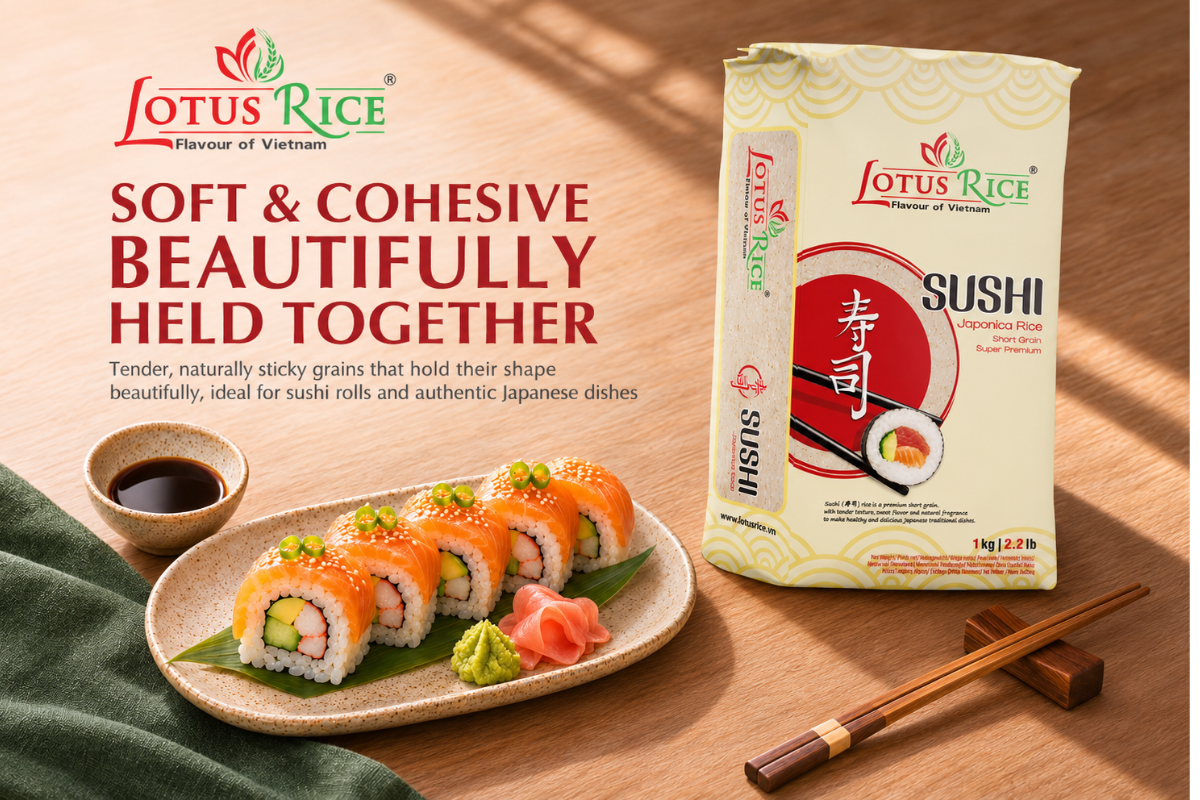
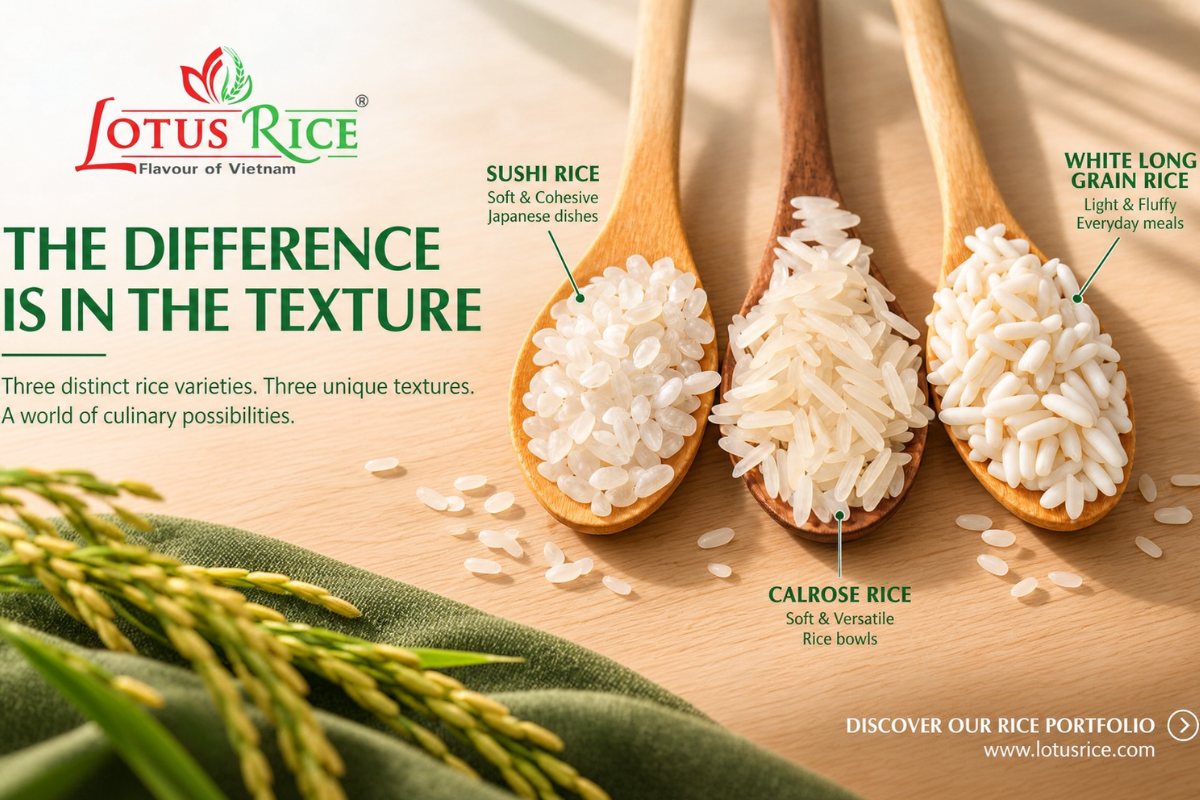
Lotus Sushi/Japonica Rice is characterized by its soft, sticky texture and natural aroma. Its cohesive cooking characteristics make it relevant to sushi and other Japanese-style dishes where grains need to hold together.
Calrose Rice – Balanced Texture for Versatile Cooking
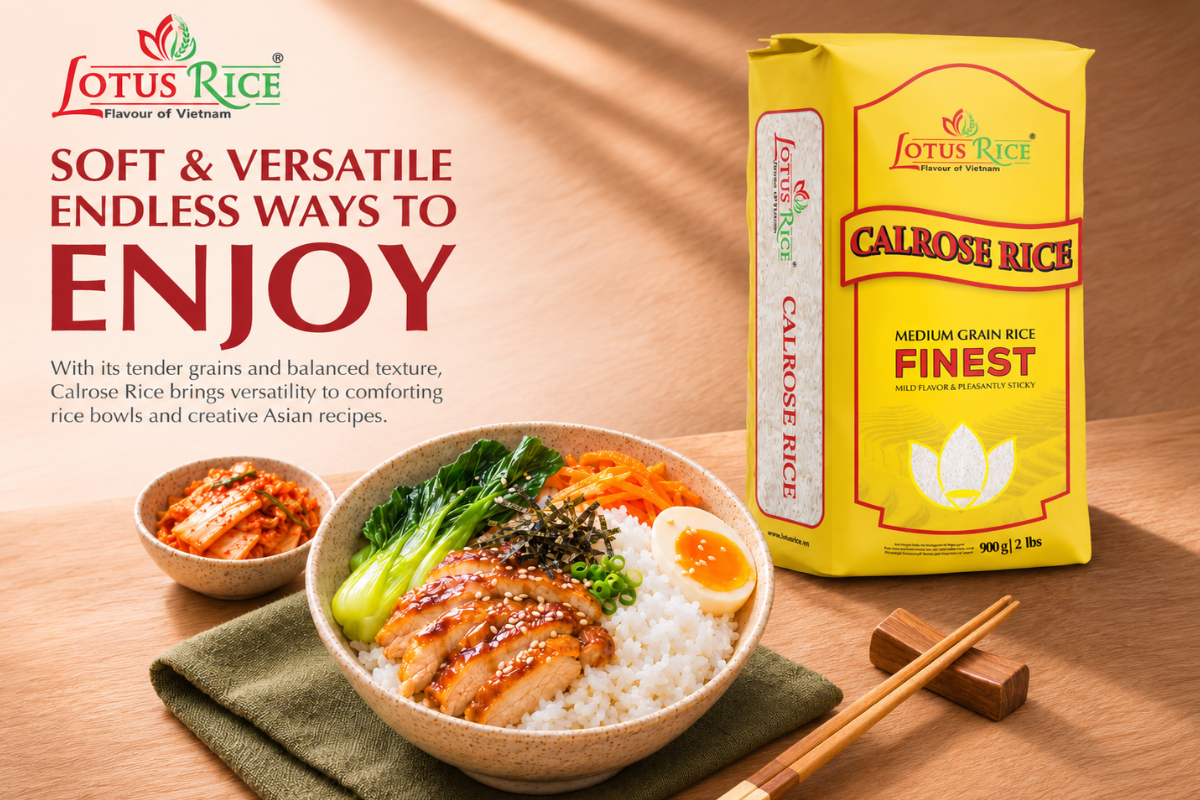
Calrose is a medium-grain rice with a soft, moist and slightly sticky texture. This balance makes it suitable for consideration across rice bowls, Asian-style meals and other applications requiring tenderness with some grain cohesion.
Lotus Rice presents Calrose as a versatile product direction for booth household cooking and foodservice applications.
White Long Grain Rice – Separated Grains for Everyday Versatility
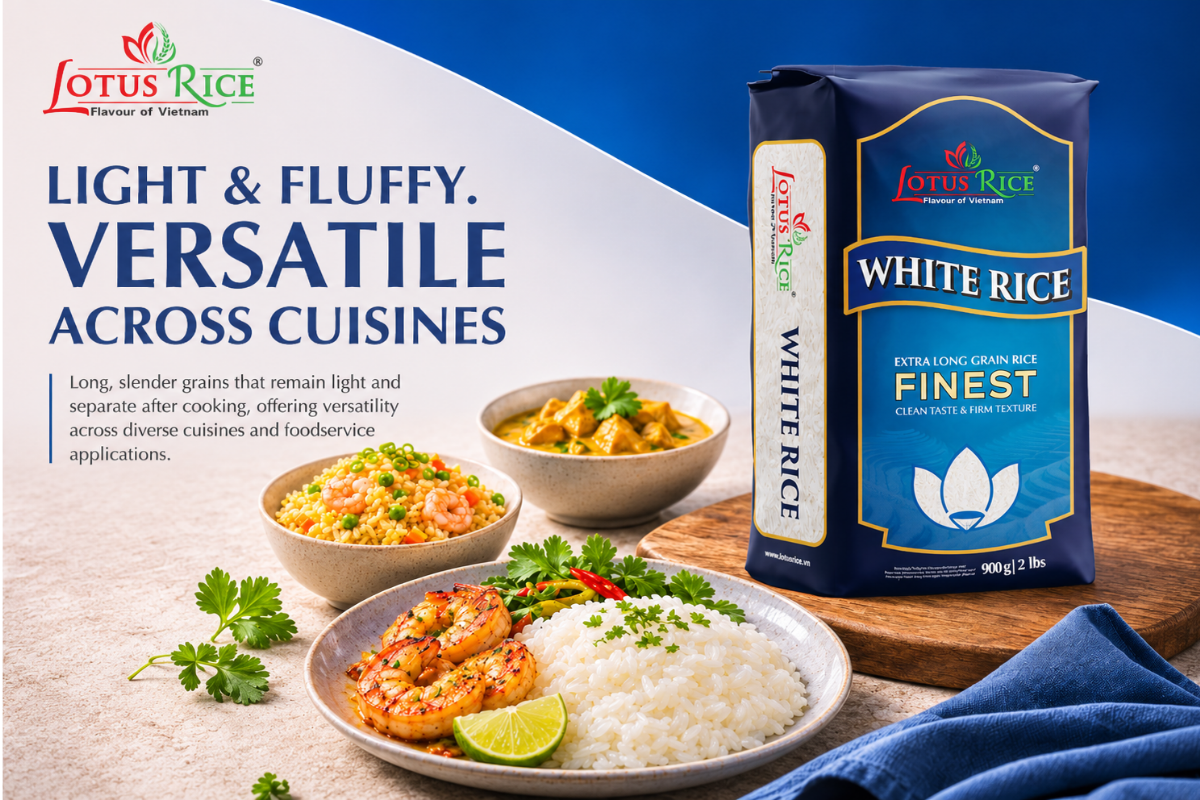
For dished where consumers prefer a fluffy texture and more distinct grains, White Long Grain Rice offers a different cooking profile.
Lotus Rice positions White Long Grain as an option for everyday meals and foodservice applications where grain separation is an important consideration.
These characteristics create different roles within a rice portfolio. The final choice, however, should be validated against the intended dish, preparation method, and consumer preference.
Successful Product Qualification Starts with the Consumer’s Plate
A rice variety may work well in one application and be less suitable for another. That does not necessarily indicate a difference in quality. It reflects a difference in what the finished dish needs to deliver.
For importers, distributors and category managers, a practical qualification process should address three questions:
- What is the intended application? Identify whether the product is being selected for sushi, rice bowls, everyday meals, or foodservice preparation.
- What texture does the consumer expect? Define the desired level of softness, stickiness, grain separation, and overall eating experience.
- How does the rice perform under real cooking conditions? Evaluate samples using the preparation methods and serving conditions relevant to the target channel.
These considerations help buyers move beyond comparing rice varieties by name alone.
They also support a more purposeful portfolio strategy, where each product has defined role-based consumer needs, culinary applications, and market positioning.
The Right Rice Is the One That Fits the Market
The difference between an acceptable rice product and the right rice product often becomes clear cooking.
For consumers, it is the familiar texture of a favorite dish. For importers and distributors, it is the connection between product performance and the expectations of the people they serve.
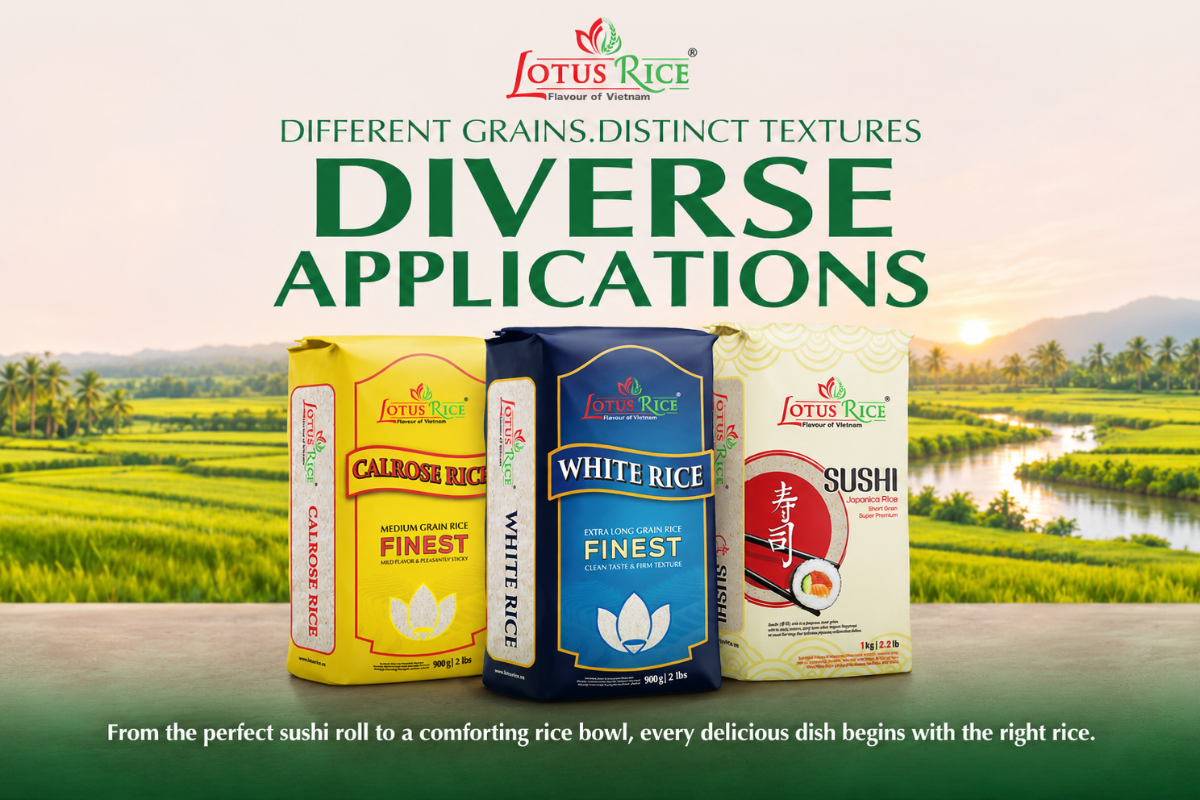
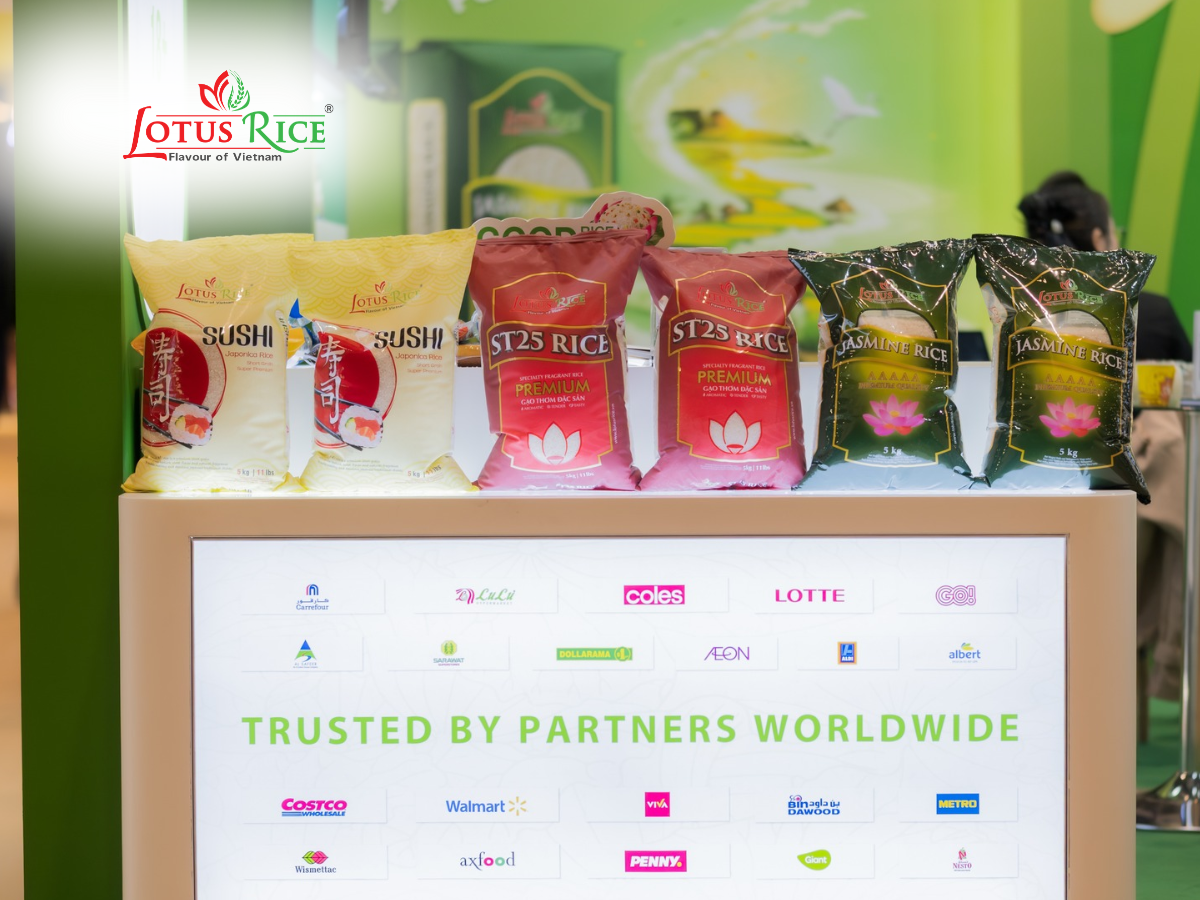
At Lotus Rice, our portfolio includes Sushi/ Japonica, Calrose and White Long Grain Rice, offering different texture profiles for different culinary applications and market requirements.
Because successful rice sourcing is not simply about choosing a variety. It is about choosing the right eating experience for the market.
Explore Lotus Rice by Application
Are you developing a new rice portfolio or evaluating products for your market?
Tell us your target market, culinary application, and preferred cooking characteristics. Explore the Lotus Rice portfolio and start a product qualifications conversation with our team.
Explore Lotus Rice by Application – Contact Our Team
#LotusRice#RicePortfolio #PremiumRice #SushiRice #CalroseRice #WhiteLongGrainRice
————————————
Website: https://www.lotusrice.vn/
Email: connect@lotusgroup.vn
WhatsApp: (+84 77) 6996 768
Phone: (+84 28) 3622 2236
Head office: No. 52, Street 10, Him Lam Residence, Tan Hung Ward, HCM