Different markets have different sourcing priorities. Understanding SRP and Organic Rice helps global buyers make more informed procurement decisions.
For international rice importers, choosing the right supplier involves more than competitive pricing and consistent grain quality. As retailers and food businesses place greater emphasis on responsible sourcing, agricultural practices, product certification, and supply chain transparency are becoming increasingly relevant to procurement decisions.
However, not every market approaches sustainable rice in the same way. Some businesses prioritize rice cultivated under recognized sustainability standards, while others require certified organic products for specific retail categories.
This raises an important question for global buyers: which sustainable rice sourcing approach best fits your market requirements? Understanding the roles of SRP Rice and Organic Rice is a practical starting point.
Why Sustainable Rice Sourcing Matters to Global Buyers
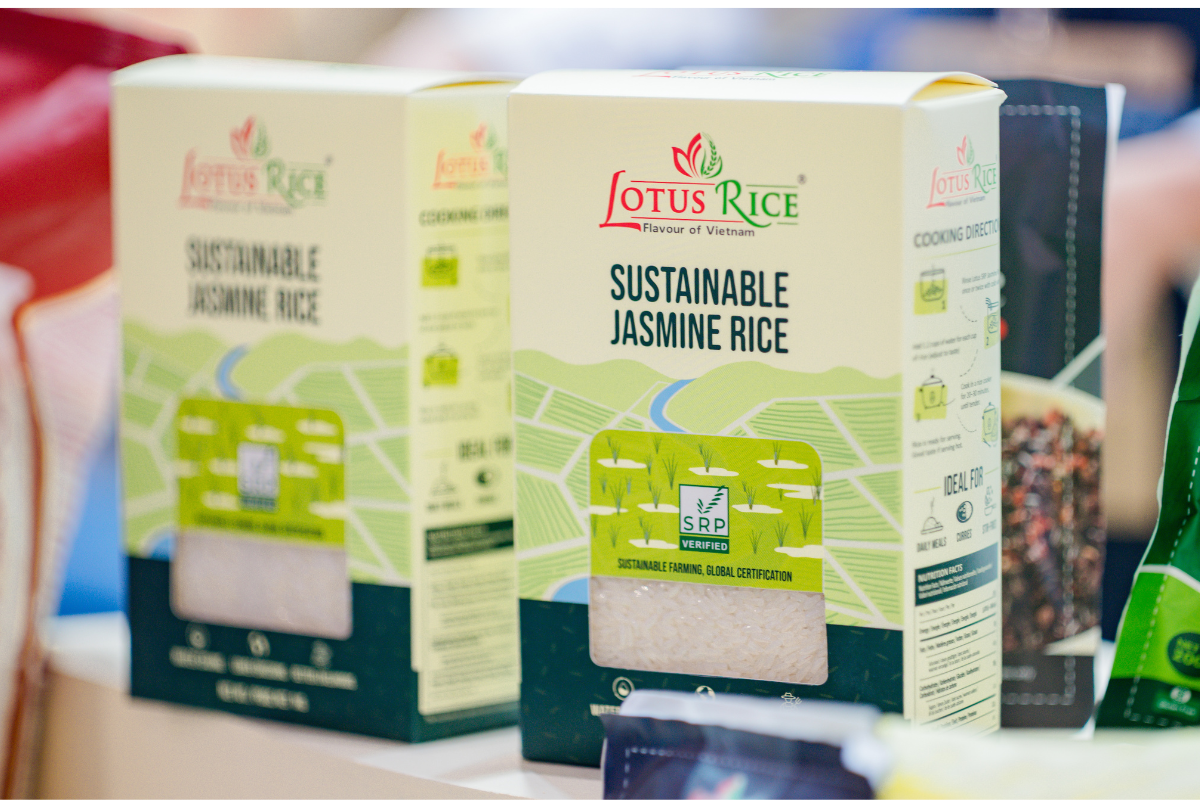
Sustainable rice sourcing is increasingly connected to how food businesses manage supply chain expectations, develop product portfolios, and evaluate long-term supplier relationships.
For importers and distributors, sourcing decisions often depend on three core considerations:
- Market Requirements: Meeting the certification, product compliance, and responsible sourcing expectations of retailers and end consumers.
- Product Positioning: Selecting rice varieties that align with culinary preferences, target retail categories, and price positioning.
- Supply Reliability: Ensuring consistent product specifications, verifiable traceability records, and uninterrupted export fulfillment.
These considerations make it essential to understand the distinct approaches available in sustainable rice production—most notably the Sustainable Rice Platform (SRP) and Organic Rice certification.
SRP vs Organic Rice: Which Approach Fits your Sourcing Needs?
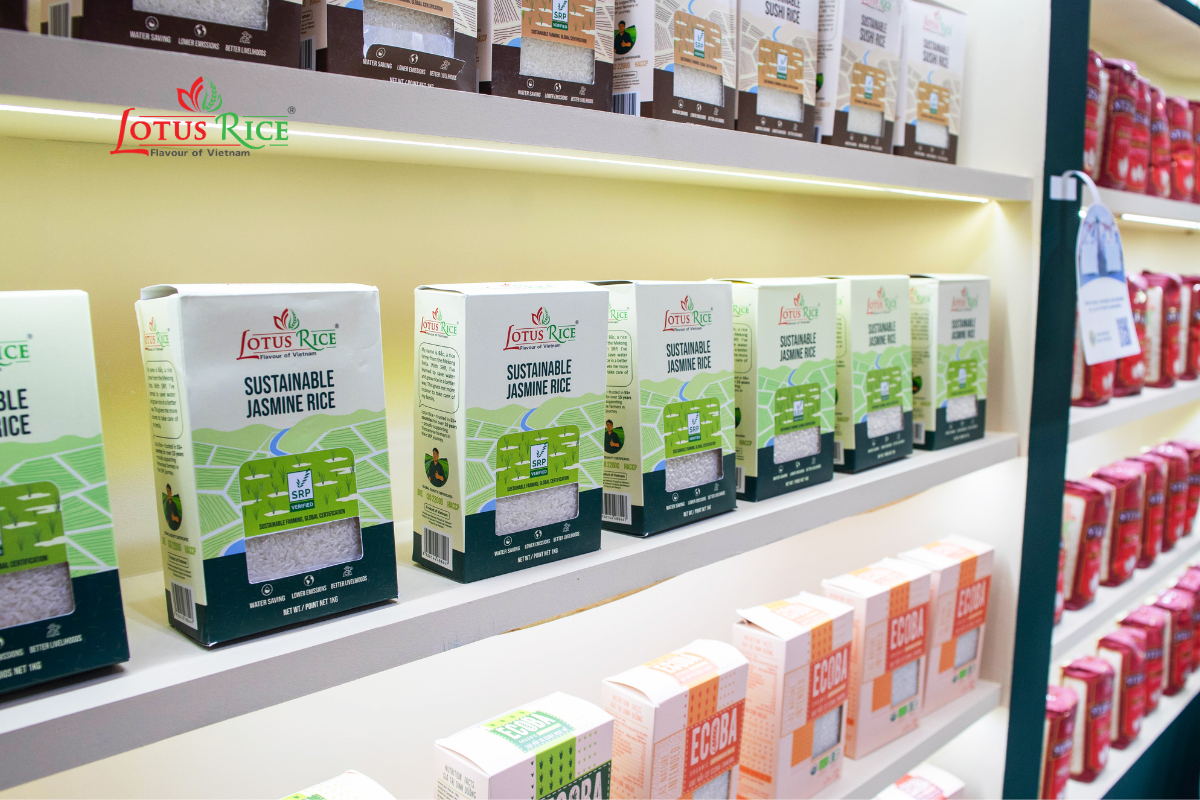
Although SRP and Organic Rice both relate to responsible agricultural production, they serve different commercial and procurement objectives.
SRP Rice: Supporting Sustainable Agricultural Practices
The Sustainable Rice Platform (SRP) provides a globally recognized framework for improving sustainability performance in rice cultivation. Its standard addresses key areas such as water management, responsible agricultural inputs, environmental protection, and farmer well-being.
For procurement teams, SRP is highly relevant when a sourcing strategy emphasizes measurable sustainability performance, reduced environmental footprint, and scalable supply. Where verified SRP claims are required, buyers should evaluate the applicable assurance status and chain-of-custody documentation.
Organic Rice: Meeting Certified Organic Market Requirements
Organic Rice follows strict production rules established by recognized organic standards. These frameworks regulate farming inputs and practices, including strict prohibitions on synthetic fertilizers, chemical pesticides, and genetically modified organisms (GMOs).
For importers developing certified organic portfolios, official certification is mandatory to support compliant product labeling and market access. Depending on the destination market, relevant frameworks typically include USDA Organic, EU Organic, and JAS Organic.
Key Differences for Rice Importers
| Sourcing Criteria | SRP Rice | Organic Rice |
| Primary Objective | Improve environmental and social sustainability performance in cultivation | Meet strict, regulated organic production requirements |
| Buyer Priority | Responsible agricultural practices, ESG/carbon reduction goals, and scalable sourcing | Certified organic retail categories and chemical-free positioning |
| Supply Scalability | High scalability; suitable for mainstream retail volume and large tenders | Limited by certified transition land; suited for specialized or niche volume |
| Price Positioning | Competitive; closely aligned with conventional mainstream rice pricing | Premium tier reflecting higher cultivation costs and lower yields |
| Documentation | Applicable SRP verification and chain-of-custody records | Valid organic transaction certificates (TC) and destination-market import docs |
| Commercial Relevance | Mass-market retail sustainability programs and foodservice/industrial sourcing | Organic specialty stores, health-focused retail lines, and premium private labels |
The right choice depends on the buyer’s commercial objectives, not simply which standard appears “more sustainable.” SRP and Organic certifications are not interchangeable, and neither automatically guarantees a price premium or stronger market demand without alignment with target consumer expectations.
What Should Importers Look for in a Sustainable Rice Supplier?
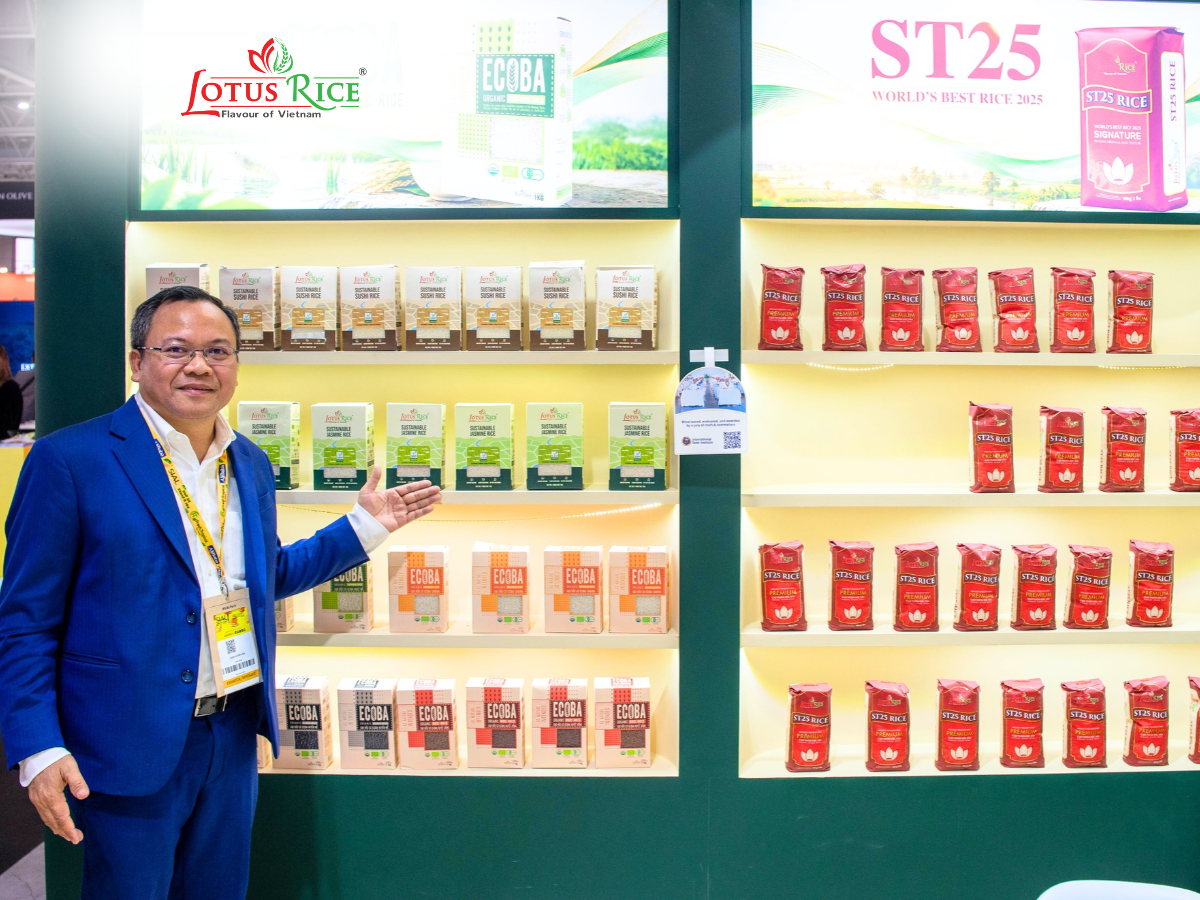
Beyond understanding sourcing standards, procurement managers should assess whether a supplier can consistently support their commercial and operational requirements:
- Relevant Certification and Documentation: Buyers should confirm that certifications, verification claims, and accompanying documentation correspond directly to the specific products being sourced. For organic rice, certification scope and destination-market import requirements are critical. For SRP-Verified Rice, assurance and chain-of-custody evidence must substantiate intended sourcing and labeling claims.
- Product Quality and Market Fit: Sustainability credentials must be backed by grain characteristics that match local consumer preferences. Fragrant Jasmine Rice, soft Japonica Rice, and nutrient-rich specialty varieties serve distinct culinary traditions and retail segments. A capable supplier should help buyers evaluate both sustainability compliance and cooking specifications.
- Traceability and Supply Reliability: Responsible sourcing depends on transparent origin tracking and well-maintained supply chain records. Consistent milling, quality management, flexible packaging options, and smooth export coordination remain essential when bringing sustainable rice to international markets.
A credible sourcing partner should be evaluated on the complete supply proposition, rather than certification alone.
Lotus Rice: Sustainable Rice Solutions from the Mekong Delta
Rooted in Vietnam’s Mekong Delta, Lotus Rice connects the region’s agricultural heritage with modern international sourcing requirements. Serving markets in more than 60 countries, Lotus Rice offers diverse product options for importers, retailers, and distributors building sustainable rice portfolios.
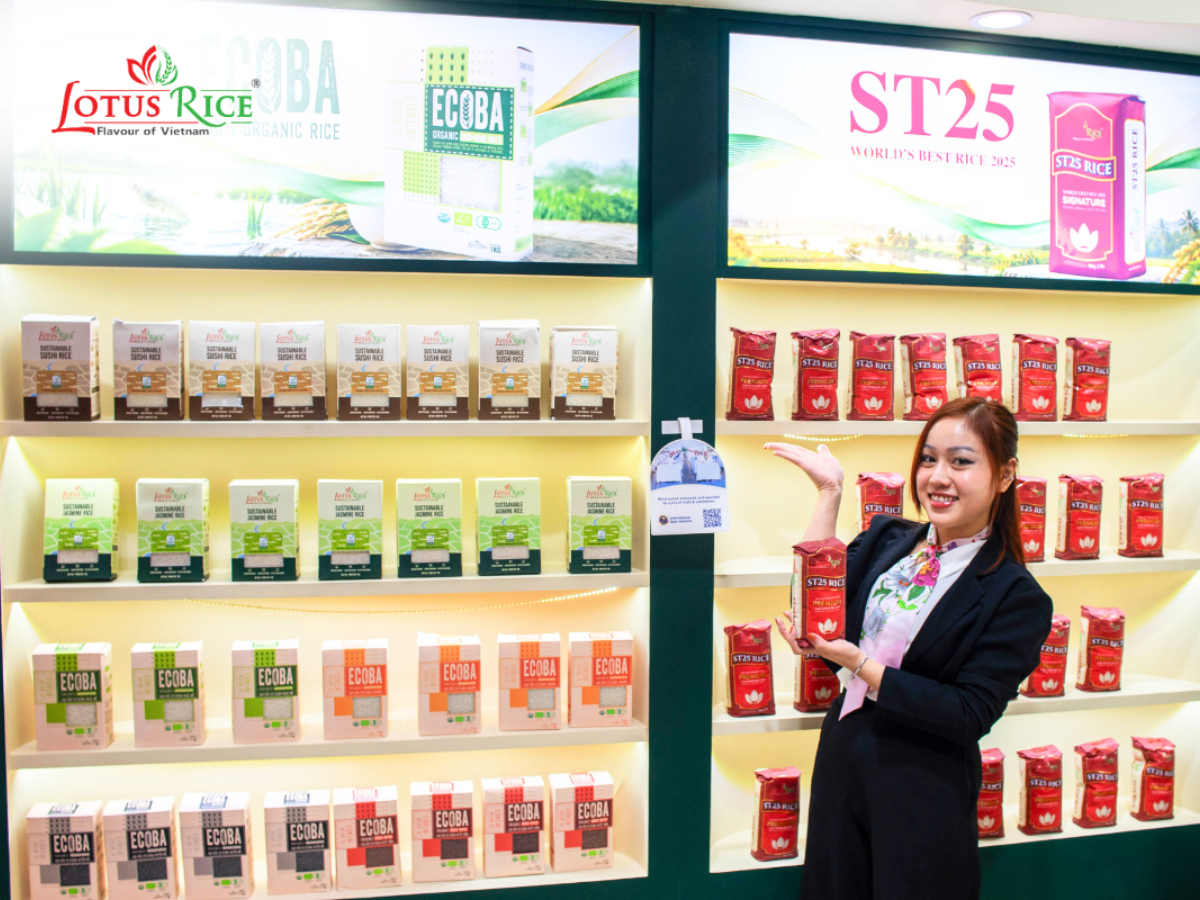
Our approach to responsible sourcing encompasses participation in the Sustainable Rice Platform (SRP) initiative and the development of ECOBA Organic Rice—addressing distinct buyer priorities while reflecting a shared commitment to responsible cultivation.
Lotus SRP Rice: For Sustainability-Focused Sourcing

Lotus Rice supports the adoption of SRP principles through active engagement with sustainable rice farming in Vietnam. The Lotus SRP Rice portfolio highlights two core varieties with distinct culinary profiles:
- Lotus SRP Jasmine Rice: Known for its delicate natural fragrance and tender texture, making it an ideal choice for markets where aromatic long-grain rice is preferred.
- Lotus SRP Sushi Rice: Featuring the soft, cohesive texture of Japonica-style rice, tailored for sushi and Japanese-inspired culinary applications.
These options connect recognizable, high-demand rice varieties with sustainability-focused procurement goals. Buyers can request full product specifications along with applicable SRP verification and traceability documentation.
ECOBA Organic Rice: For Certified Organic Portfolios
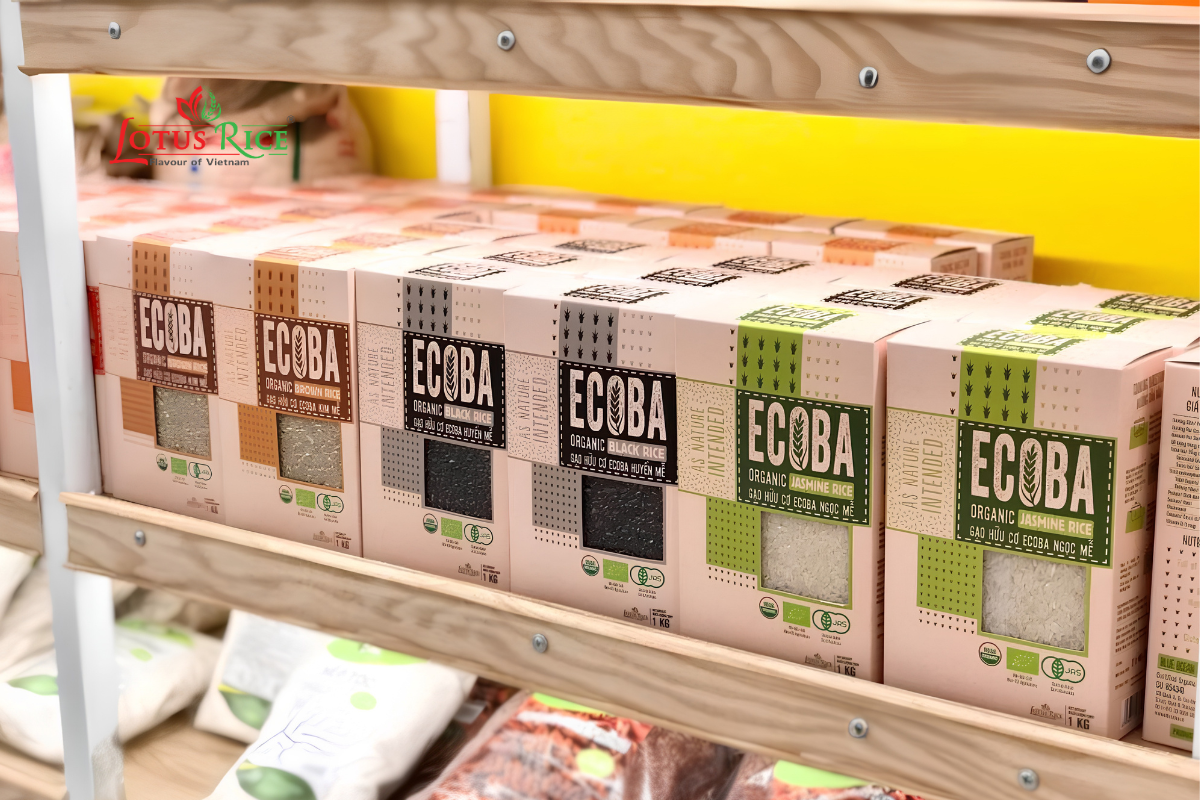
ECOBA Organic represents Lotus Rice’s dedicated approach to organic cultivation, leveraging the natural ecosystem of the Mekong Delta.
A distinctive feature of ECOBA is its rice-shrimp rotation farming model. In this system, rice and shrimp are cultivated across alternating seasons, allowing farmers to work in harmony with natural brackish-freshwater cycles while maintaining soil fertility and ecological balance without synthetic inputs.
ECOBA offers a comprehensive organic rice portfolio—enabling importers to consolidate multiple SKUs from a single origin—including:
- ECOBA Organic Jasmine Rice
- ECOBA Organic Japonica Rice
- ECOBA Organic Brown Rice
- ECOBA Organic Red Rice
- ECOBA Organic Black Rice
Developed in alignment with international organic frameworks—including USDA Organic, EU Organic, and JAS—ECOBA provides reliable options for buyers building certified organic categories. Product-specific certification scope and applicable documentation are confirmed for each destination market.
Choosing the Right Sustainable Rice Starts with the Right Partner
There is no single sourcing approach that fits every rice market. For businesses prioritizing measurable sustainability improvements and scalable supply, SRP provides a practical framework for verified responsible sourcing. For importers developing certified organic lines, Organic Rice offers a distinct pathway aligned with strict production and labeling regulations.
In both cases, a successful procurement decision depends on more than the standard itself—product quality, accurate documentation, traceability, and reliable execution remain essential. At Lotus Rice, we bring together the agricultural strengths of Vietnam’s Mekong Delta, diverse rice varieties, and responsible sourcing programs to support the evolving needs of global rice buyers.
Different markets. Different sourcing priorities. One commitment to responsible rice.
Explore Lotus SRP Rice and ECOBA Organic Solutions
Discover sustainable rice sourcing options tailored to your market and connect with Lotus Rice to discuss product specifications, applicable certifications, and export requirements.
Contact Lotus Rice today to explore the right rice solutions for your business.
LotusRice PremiumRice VietnameseRice RiceSourcing
————————————
Website: https://www.lotusrice.vn/
Email: connect@lotusgroup.vn
WhatsApp: (+84 77) 6996 768
Phone: (+84 28) 3622 2236
Head office: No. 52, Street 10, Him Lam Residence, Tan Hung Ward, HCM