Sustainable rice farming begins long before the harvest. It takes shape through everyday decisions about water management, crop protection, and the way farmers care for their land.
For global rice buyers, responsible sourcing is increasingly about understanding not only the quality of rice, but also the practices behind its production.
At Lotus Rice, our participation in the Sustainable Rice Platform (SRP) reflects a commitment to bringing responsible agricultural principles into practice alongside farmers in Vietnam’s Mekong Delta.
Why Sustainable Rice Farming Matters
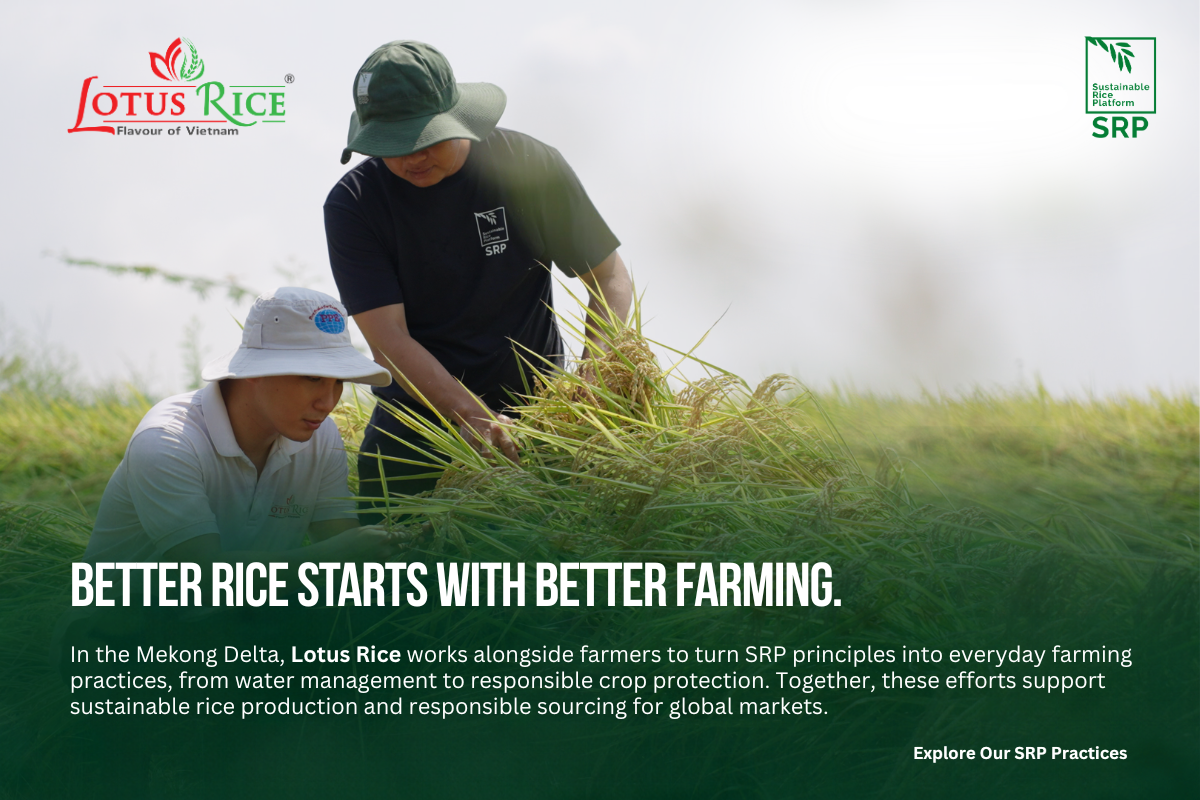
Rice cultivation depends on natural resources. Particularly water and soil, as well as the knowledge of farming communities.
With growing environmental pressures and evolving international sourcing expectations, the rice industry must look beyond production volumes to consider how rice is cultivated.
Sustainable rice farming focuses on three essential priorities:
- Responsible Resource Management: Improving how water, soil, and agricultural inputs are managed throughout cultivation.
- Farmer Empowerment: Supporting farming communities with practical knowledge and technical guidance.
- Responsible Sourcing: Connecting agricultural practices with clearer standards and greater supply chain accountability.
These priorities form the foundation of the Sustainable Rice Platform, a global initiative that promotes more sustainable rice production through defined agricultural practices.
From SRP Standards to Every Farming Practices
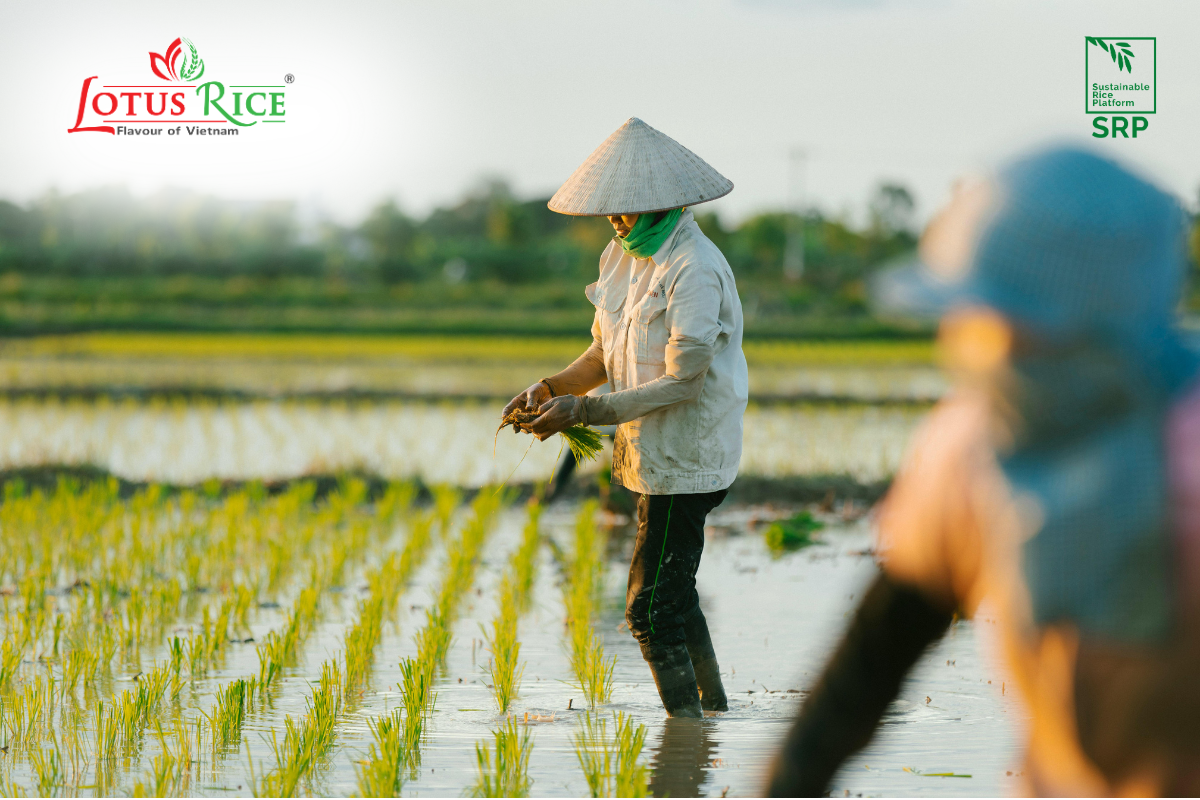
A sustainability standard becomes meaningful when farmers can apply it in their fields.
The Sustainable Rice Platform (SRP) provides a framework for improving environmental, social, and economic practices across rice cultivation.
At Lotus Rice our SRP engagement focuses on connecting these principles with practical farming activities in the Mekong Delta.
Better Water Management
Water management plays an essential role in rice cultivation.
Through SRP-related training, farmers receive guidance on water efficiency and responsible irrigation practices, supporting more informed decisions about resource use throughout the growing season.
Responsible Crop Protection
Protecting rice crops requires careful observation and timely action.
Integrated Pest Management (IPM) encourages farmers to monitor crop conditions and select appropriate protection methods, supporting a more balanced approach to agricultural inputs and environmental responsibility.
Farmer Knowledge and Training
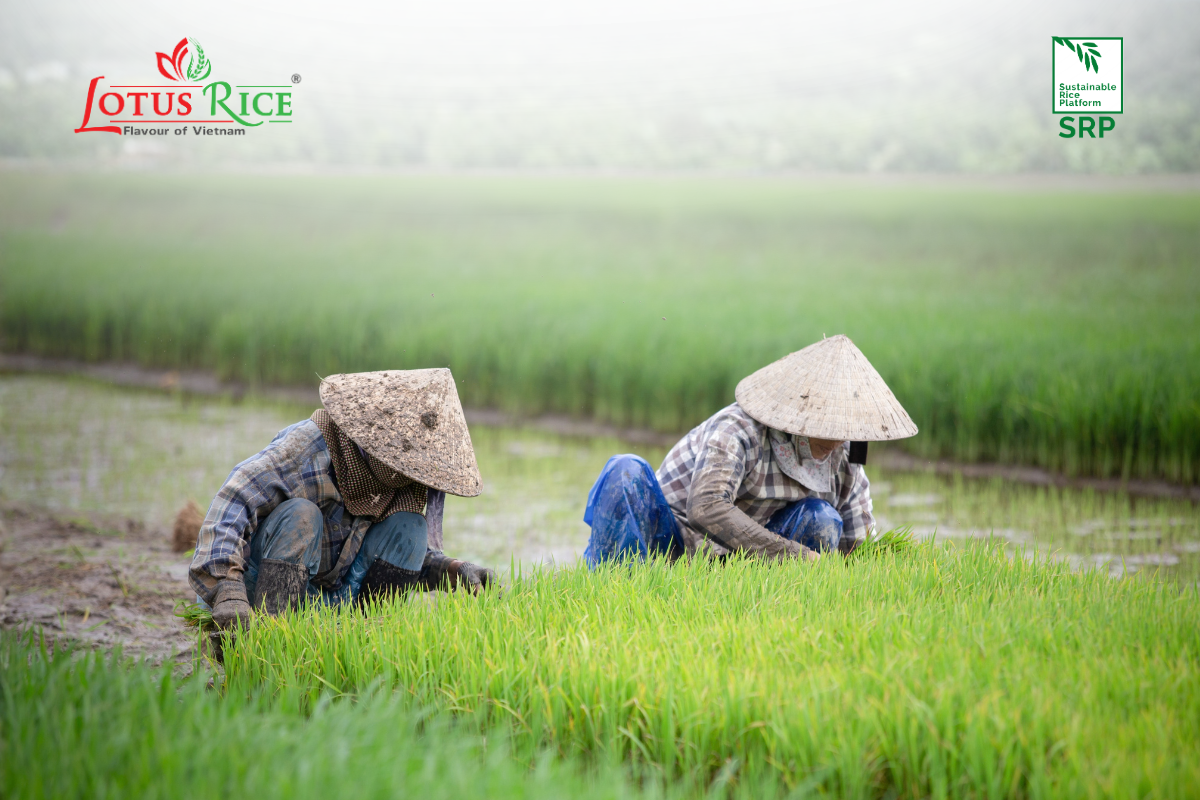
Vietnamese farmers bring generations of experience in understanding soil, water, seasons, and crop development.
Lotus Rice works with farming communities through technical support and agricultural training, helping connect local knowledge with responsible farming practices and climate-aware approaches.
Together, these activities demonstrate how SRP principles can move from written standards into everyday cultivation.
Why Responsible Rice Sourcing matters to Global Buyers
For rice importers, distributors, and retailers, sustainability considerations increasingly extend beyond finishes-product specifications.
Understanding agricultural practices at origin can help buyers make more informed sourcing decisions and assess how suppliers approach environmental and social responsibility.
Three considerations are particularly important:
- Farming Practices: Understanding how resource management and crop protection are approached at the production level.
- Farmer Engagement: Evaluating how agricultural knowledge, training, and technical support contribute to responsible cultivation.
- Supply chain accountability: Reviewing sourcing documentation, traceability, and applicable verification requirements.
SRP provides a common framework for discussing these expectations between rice producers and international sourcing partners.
However, SRP membership and independently verified SRP products are not interchangeable. Product-specific verification and documentation should be confirmed according to each buyer’s requirements.
Lotus Rice: Building Responsibility from the Field
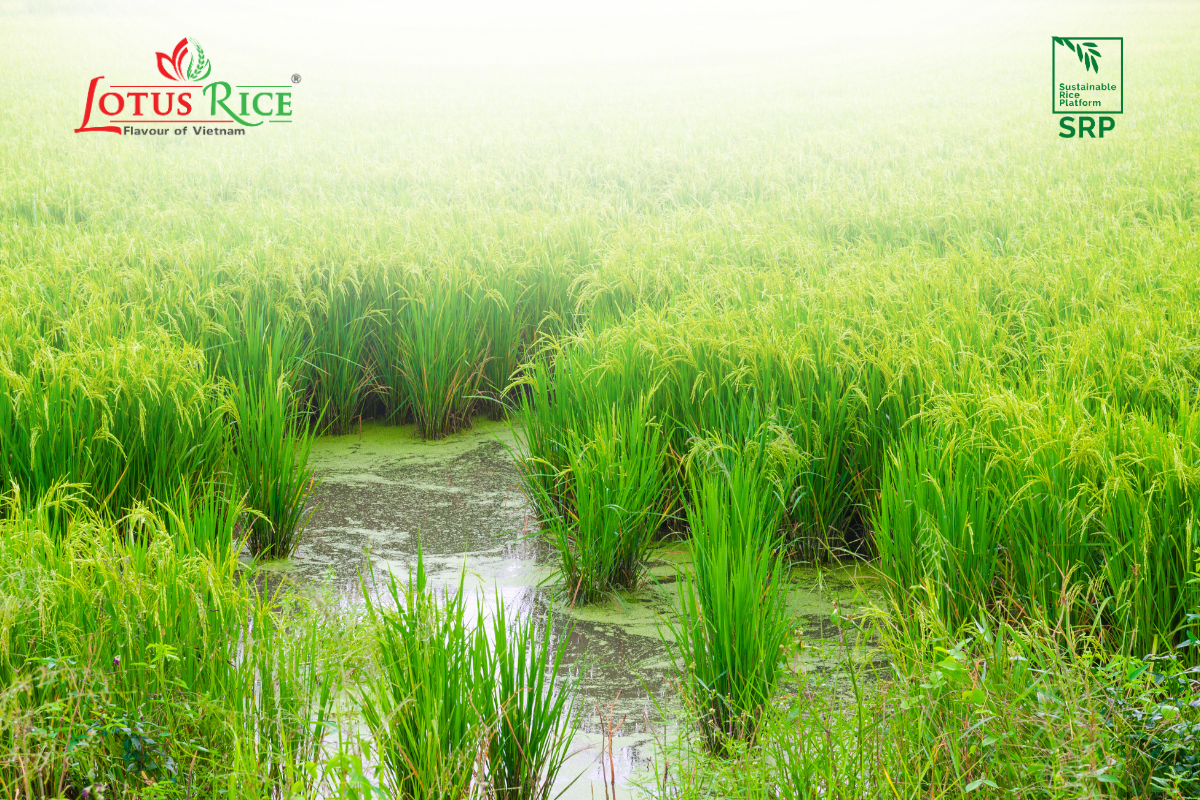
For Lotus Rice, responsible sourcing begins with the people who grow the rice.
By working alongside Mekong Delta farmers and supporting the adoption of SRP-related practices, we seek to strengthen the connection between agricultural knowledge, sustainable cultivation, and global sourcing expectations.
Because better rice starts with better farming, and meaningful progress begins with the actions taken in the field.
Explore Responsible Rice Sourcing with Lotus Rice

Looking for a Vietnamese rice sourcing partner committed to responsible agriculture?
Discover how Lotus Rice brings SRP principles into practice and explore sourcing opportunities tailored to your market.
Connect with our team to discuss your sourcing requirements, available SRP-related products, and supporting documentation.
#LotusRice #PrideOfNature #SustainableRice #SRP #SustainableAgriculture