The 2026–2027 Winter–Spring rice crop is taking shape across Vietnam’s Mekong Delta. For global rice buyers, this is more than the start of another agricultural season. It is an important period to understand crop timing, rice quality factors, future availability and sourcing readiness before the next harvest reaches the market.
For importers, distributors, retailers and private-label buyers, early seasonal visibility can support better procurement planning for 2027.
At Lotus Rice, we believe informed sourcing starts with understanding the fields where every grain begins.
Why the Winter–Spring Rice Crop Matters to Global Buyers
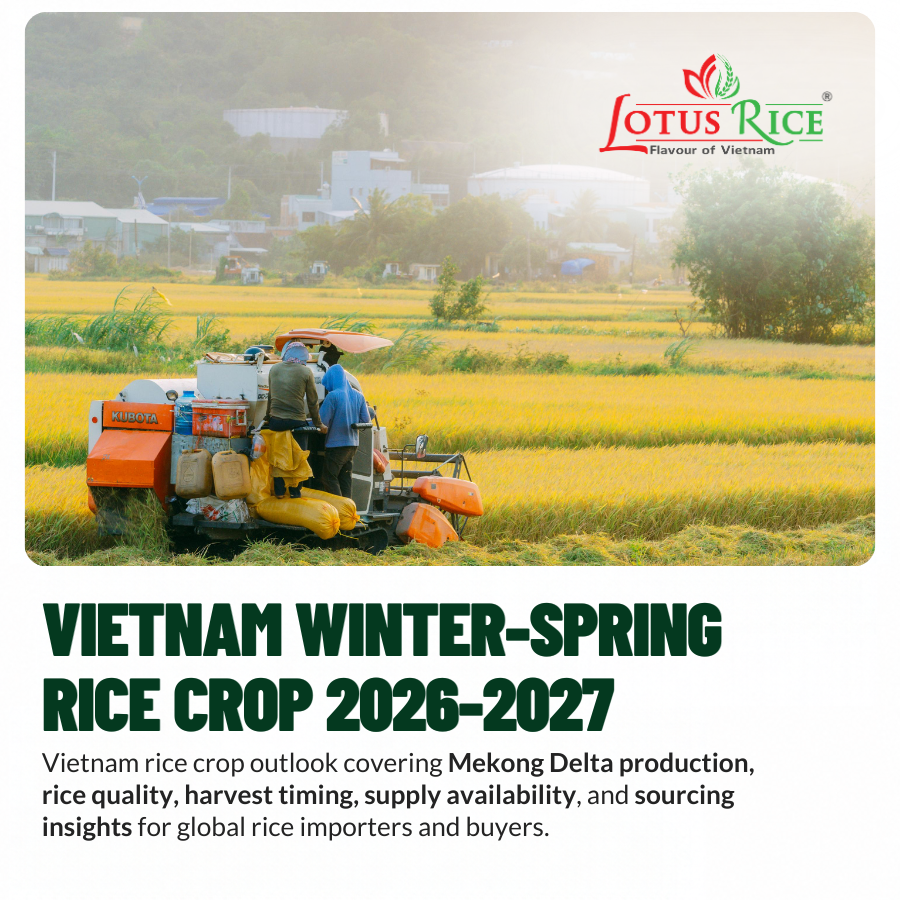
Vietnam’s Winter–Spring crop is one of the country’s most important rice production seasons.
According to the Food and Agriculture Organization, the mostly irrigated Winter–Spring crop accounts for approximately 45% of Vietnam’s annual paddy production.
For global rice buyers, following the season early helps answer three practical questions:
- When may the next crop become available?
- What conditions may influence grain quality?
- When should sourcing discussions begin?
Understanding these factors allows buyers to prepare product specifications, packaging requirements, procurement schedules and commercial plans before the new crop enters the market.
Vietnam Winter–Spring Crop 2026–2027: Seasonal Timing
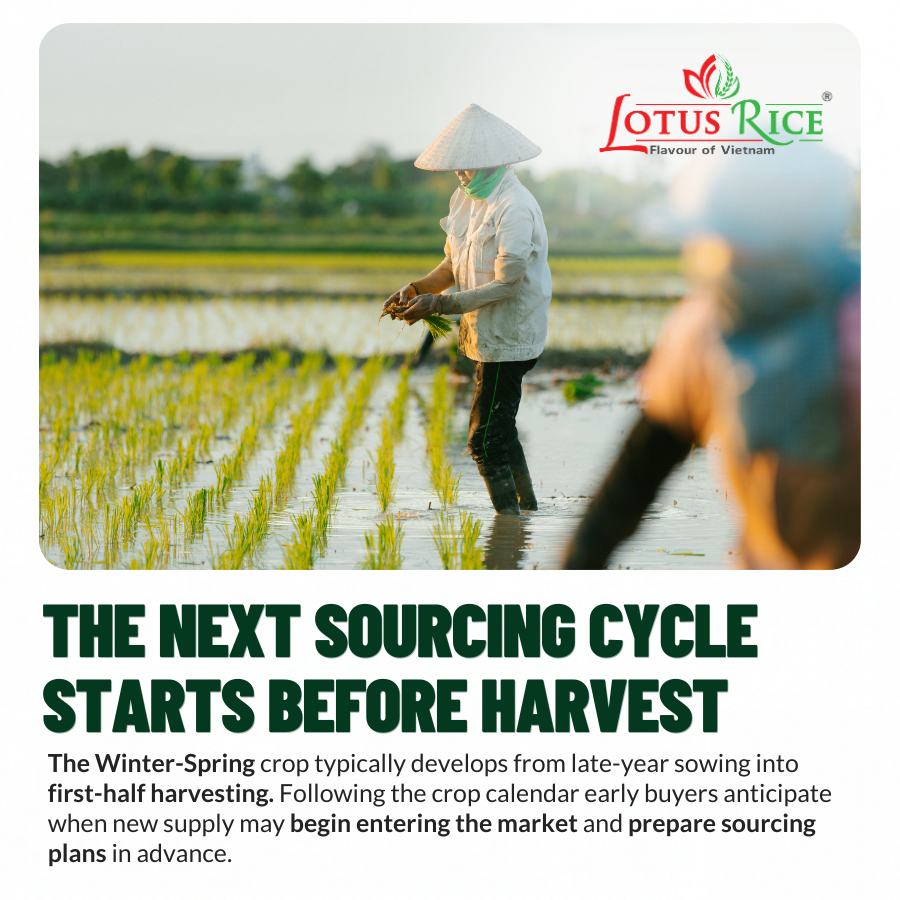
In the Mekong Delta, Winter–Spring rice cultivation generally develops from the final months of one year into the first half of the next.
Lotus Rice’s seasonal guidance identifies November to January as a typical sowing period, followed by harvesting from February to May. These are broad reference windows rather than fixed dates. Actual schedules vary depending on local agricultural guidance, irrigation conditions, weather developments and rice varieties.
For buyers, this distinction matters. A crop calendar provides visibility into when supply may begin developing, but it does not guarantee the availability of a particular variety, volume or specification.
What Should Buyers Monitor Before Harvest?
As the crop develops, several indicators deserve attention: Planting progress across key growing areas, water and weather conditions, grain maturity, and expected harvest windows.
Together, these factors provide more useful sourcing context than a harvest date alone.
How Does the Winter–Spring Season Affect Rice Quality?
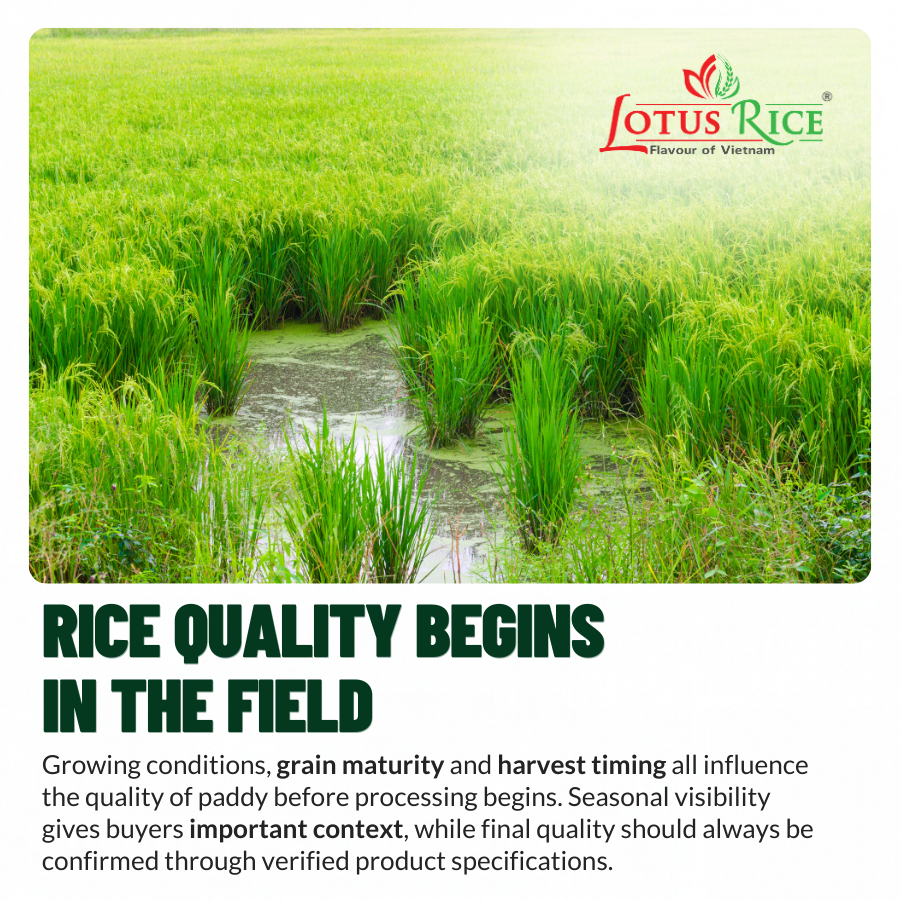
Quality Begins Before Processing
Rice quality starts long before milling.
Growing conditions, crop management, grain maturity and harvest timing can all influence raw-material quality before processing begins. Harvesting too early may result in immature or chalky grains, while delayed harvesting can increase the risk of cracking and breakage.
For rice buyers, these agricultural factors may later influence important commercial specifications such as:
Grain appearance and uniformity, moisture content, broken rice percentage, aroma and texture, and cooking performance
This is why seasonal outlooks should provide context rather than make early quality claims. The actual quality of the 2026–2027 Winter–Spring crop should ultimately be evaluated through harvest observations, processing results and verified product specifications.
Why Should Rice Importers Plan Their 2027 Sourcing Early?
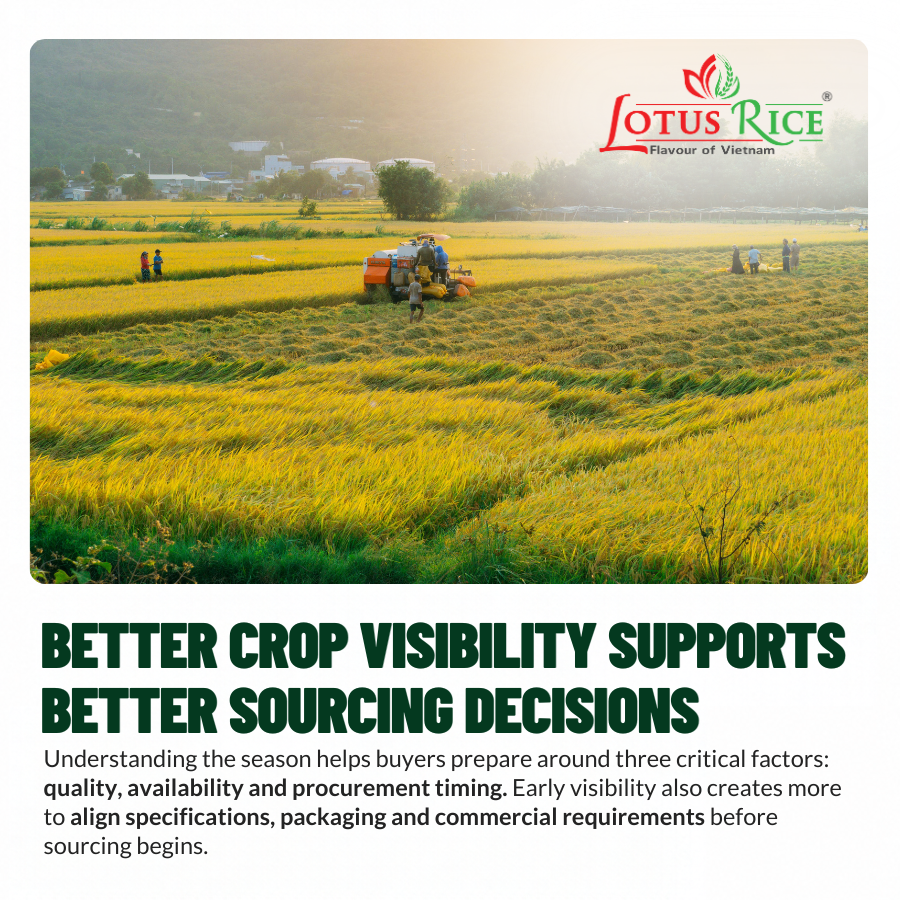
For international buyers, rice sourcing is not simply about whether supply is available.
A successful procurement program must align several factors, including product specifications, packaging formats, customer expectations, logistics and delivery schedules. Following the Winter–Spring crop early gives buyers more time to prepare these requirements before the new sourcing cycle becomes active.
For example, a buyer planning a Vietnam Jasmine Rice program can review grain characteristics, aroma, texture, broken percentage and packaging requirements before evaluating available new-crop lots.
Private-label retailers can also use the pre-harvest period to clarify product positioning, packaging formats and destination-market requirements. Early preparation does not remove seasonal uncertainty. It does, however, help buyers identify the information needed before making purchasing commitments.
What Should Buyers Confirm With Rice Suppliers?
Before planning a new-crop procurement program, buyers should review three areas.
-
Crop and Supply Information
Understand which growing areas, crop periods and harvest windows are relevant to the required rice variety.
-
Product Specifications and Quality
Define moisture levels, broken percentage, grain appearance, aroma, texture and cooking characteristics required for the target market.
-
Commercial and Shipment Requirements
Clarify packaging formats, order volume, documentation, logistics and delivery expectations before confirming supply. These discussions connect agricultural timing with practical sourcing decisions.
Lotus Rice: Connecting Mekong Delta Sourcing With Global Markets
The Mekong Delta is more than a rice-growing origin. It is where farming knowledge, growing conditions and sourcing decisions begin shaping the quality of the final product.
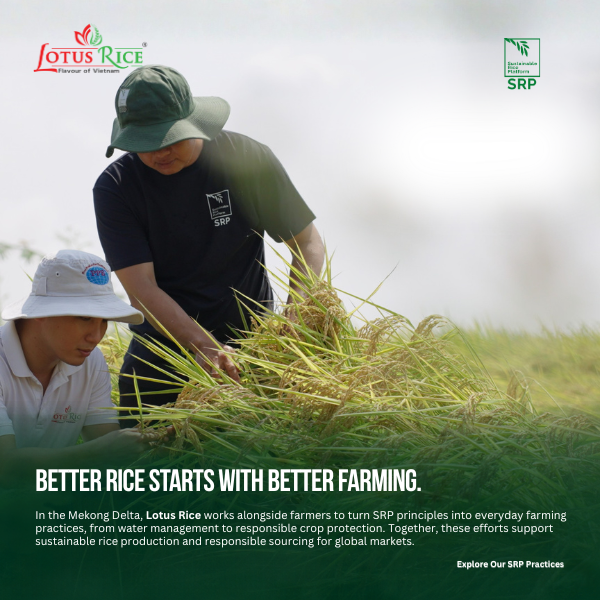
Lotus Rice works with selected sourcing areas and farming communities across the Mekong Delta, connecting local agricultural experience with cultivation guidance and international market requirements. After harvest, rice passes through defined processing stages, including cleaning, destoning, grading, milling, polishing and color sorting.
For global buyers, the value lies in understanding how origin, field knowledge, processing and product specifications work together throughout the sourcing process.
What Does This Mean for Jasmine Rice Buyers?
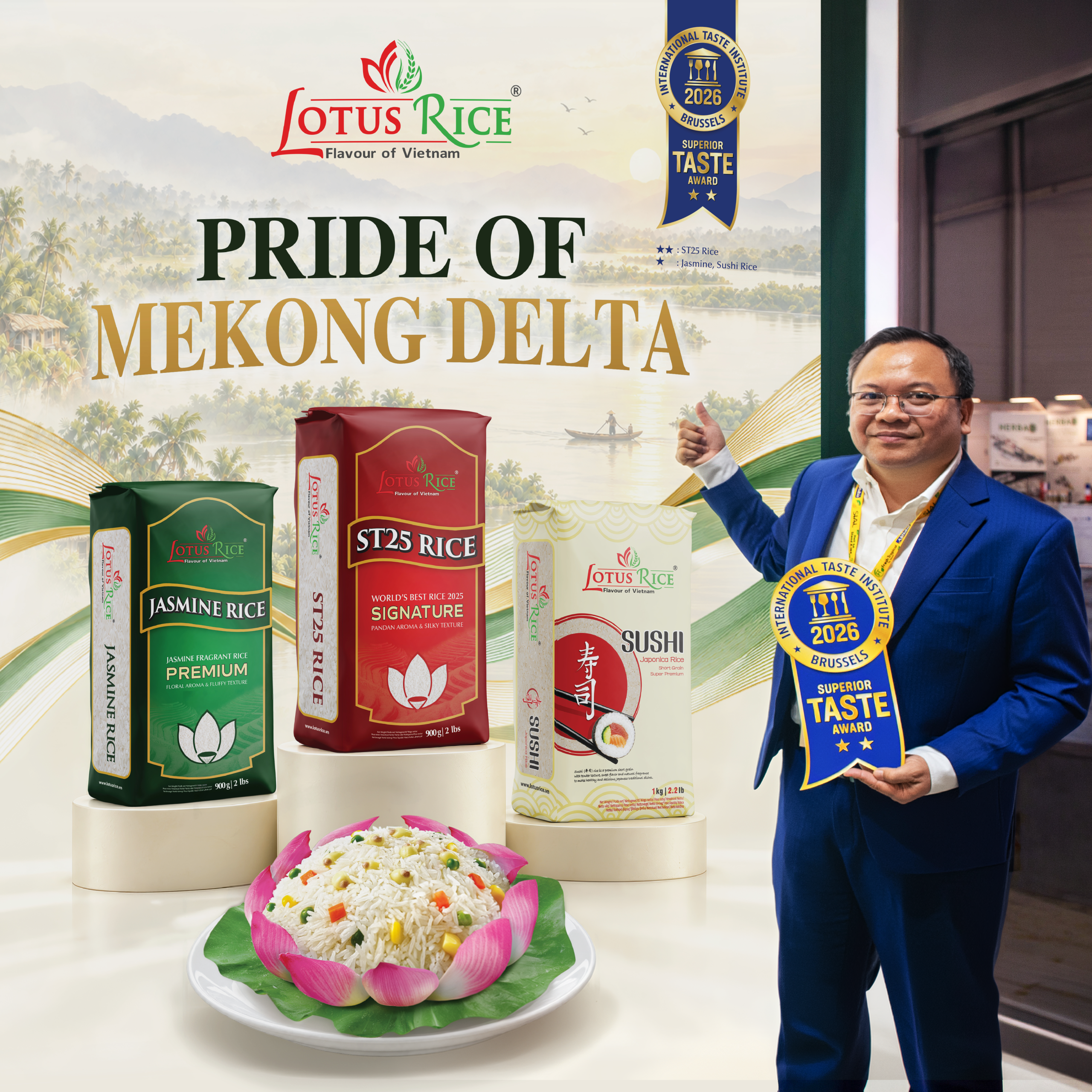
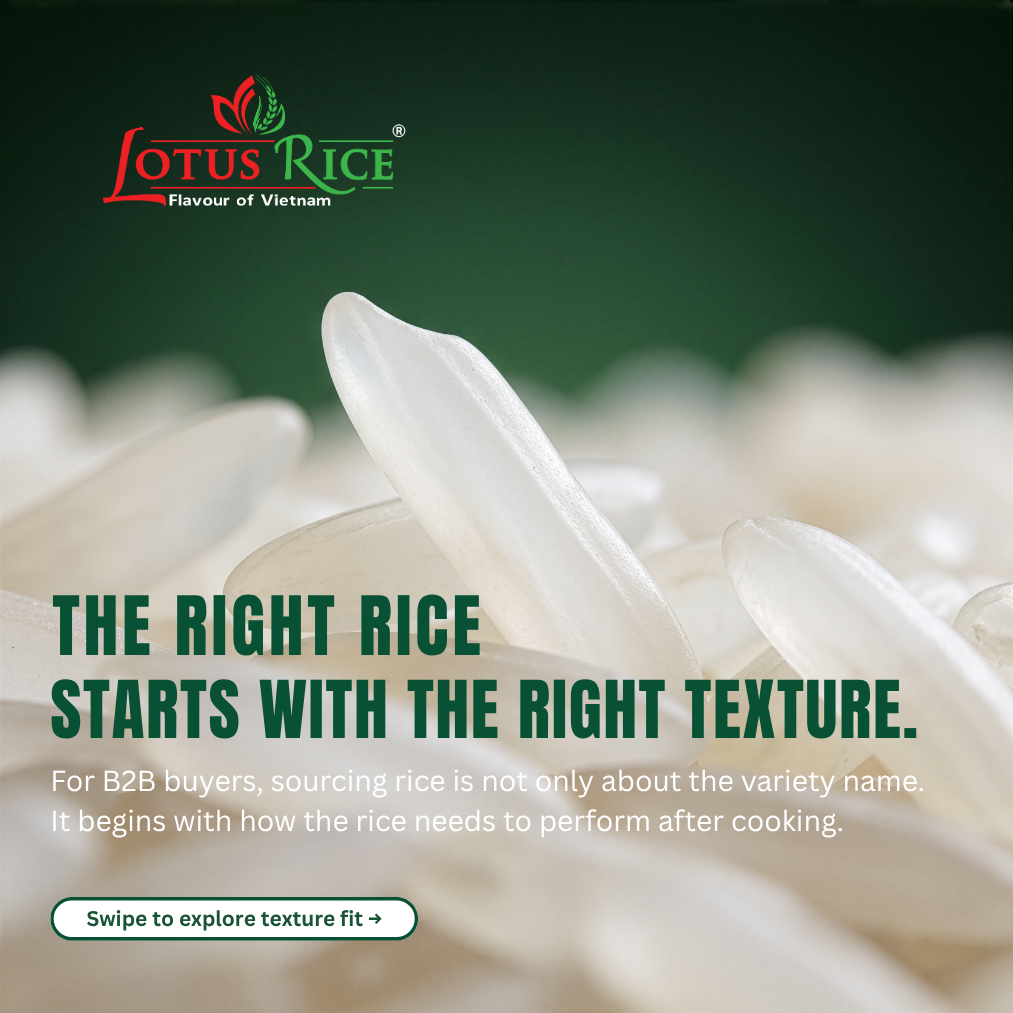
Lotus Jasmine Rice originates from Vietnam’s Mekong Delta and is known for its long grains, natural fragrance and soft texture after cooking.
For buyers evaluating Vietnamese fragrant rice, the Winter–Spring season provides important context for assessing future availability, quality specifications and product suitability. As the 2026–2027 crop progresses, more information will become available about crop development, harvest readiness, grain quality and potential sourcing windows.
Follow the 2026–2027 Winter–Spring Crop With Lotus Rice
A better sourcing decision begins before the harvest. Lotus Rice connects Mekong Delta sourcing knowledge, processing expertise and international market requirements to help global buyers understand the journey from crop development to commercial rice supply.
Plan Your 2027 Rice Sourcing With Lotus Rice
Looking ahead to your next rice procurement cycle?
Connect with Lotus Rice to discuss the 2026–2027 Winter–Spring crop, Vietnam Jasmine Rice, product specifications, packaging solutions and sourcing requirements.
Follow the crop. Understand the quality. Plan your sourcing with Lotus Rice.
#LotusRice #WinterSpringCrop #VietnamRice #MekongDelta