Discover how Vietnamese farmers use field observation, crop care and seasonal knowledge to shape rice quality from the first stage of the Lotus Rice value chain.
When rice reaches the market, its quality can be assessed through defined specifications such as grain appearance, moisture, broken rate, and cooking performance. Yet the foundation behind these measurable qualities is established much earlier – through the conditions of the field and the decisions made throughout the growing season.
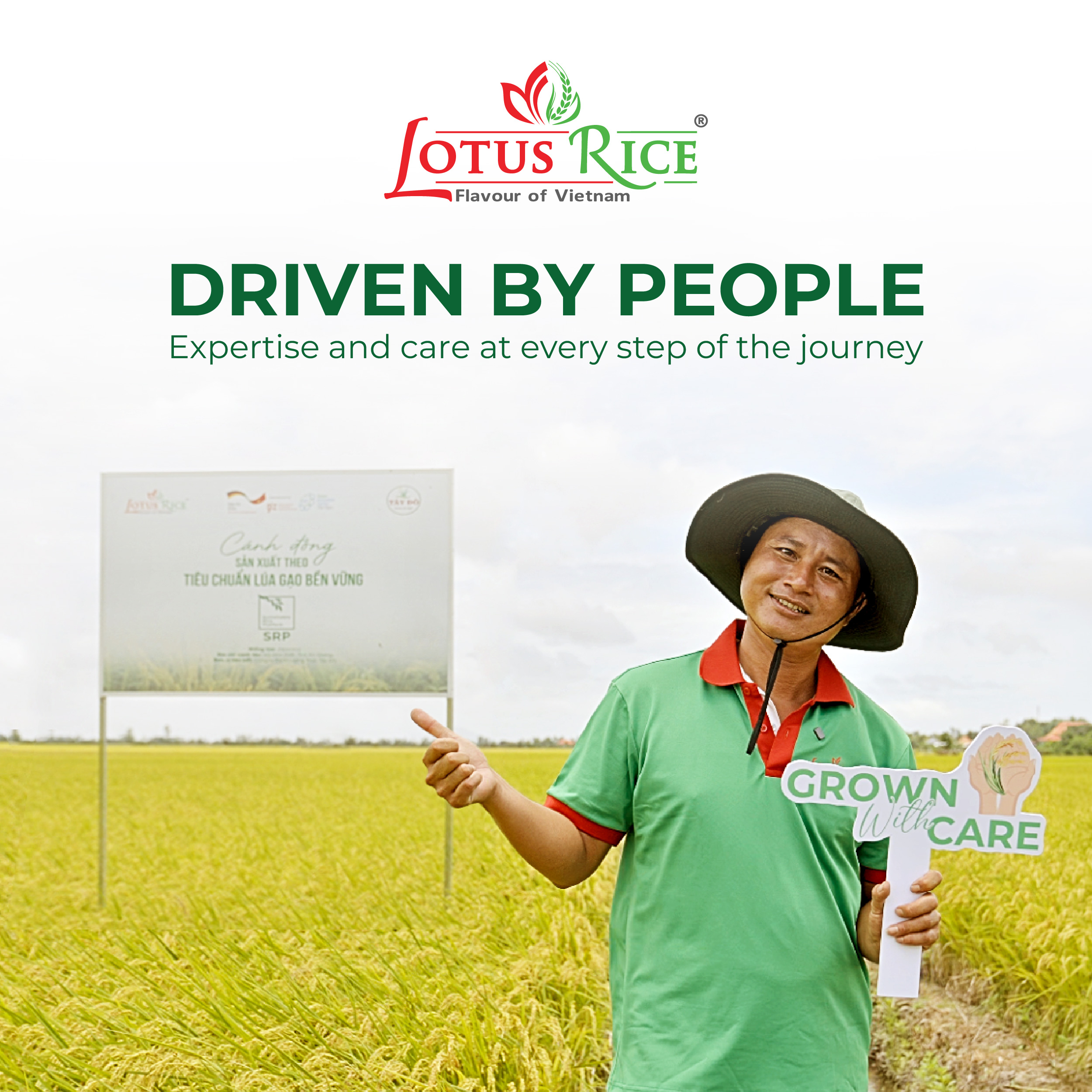
Vietnamese farmers do more than cultivate rice. They observe how soil, water, weather, and crop development interact, then respond according to what each stage requires. For Lotus Rice, this knowledge forms the first and most essential link in the quality chain.
Rice quality Begins before processing
Processing plays an important role in cleaning, grading, and preparing rice according to defined product requirements. However, the processing line receives a grain whose natural condition has already been influenced by soil health, water management, crop care, and harvest timing.
For B2B buyers, this distinction matters. Reliable finished products require more than effective factory controls; they also depend on a strong raw-material foundation. The decisions made by farmers therefore influence the starting quality that Lotus Rice continues to manage through processing, packing, and export preparation.
The field creates the first quality conditions
Soil, water, and weather do not operate as separate elements. Together, they create the growing environment in which the grain develops. Vietnamese farmers use field observation to understand these conditions and determine how the crop is responding throughout the season.
Their role is not to follow the same routine regardless of circumstances. It is to recognize change, connect different field signals, and make timely decisions that support the crop’s development.
Farmer Knowledge Connects Every Stage of Cultivation
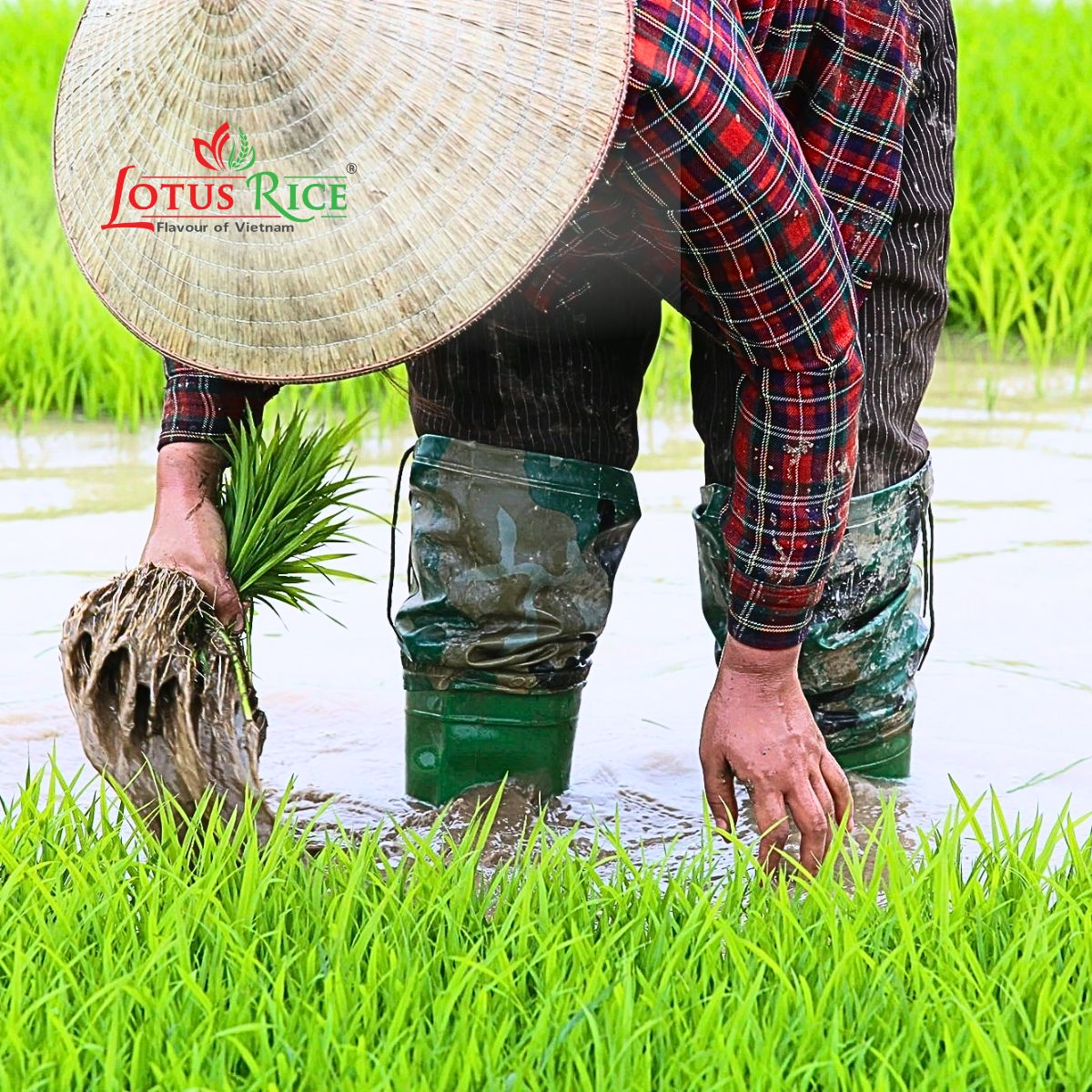
A rice season requires many factors to work together. Farmers must understand the condition of the soil, manage water according to the crop’s development, observe signs of pest pressure, and determine when the grain is ready for harvest. Each decision influences the conditions for the next.
Farmer knowledge therefore functions as a connected system. It combines repeated observation, seasonal experience, and the ability to respond when field conditions change.
Understanding the Soil
Healthy soil provides the physical and nutritional foundation for rice cultivation. Farmers observe how plants develop within the field to understand whether that foundation is supporting the crop effectively.
This observation is continuous rather than limited to the beginning of the season. Changes in plant growth may reflect broader conditions beneath the surface, making farmer attention an important part of field management.
Managing Water Through the Growing Cycle
Water requirements can change as rice moves through different stages of development. Farmers monitor field conditions and determine when water should be maintained, adjusted, or reduced.
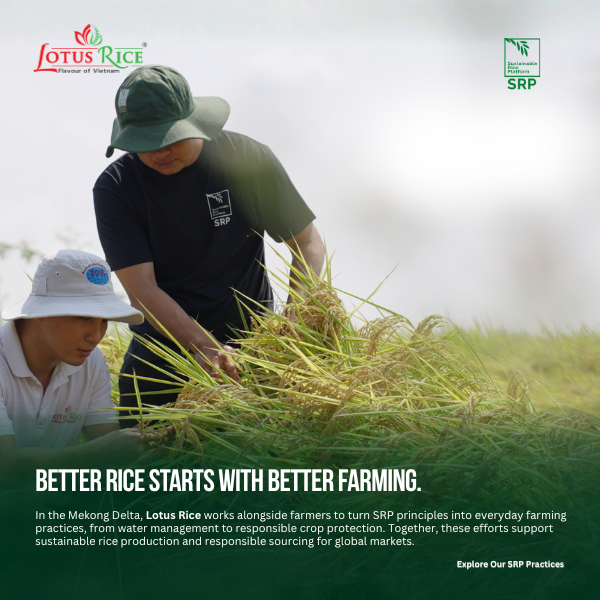
This is not an isolated irrigation decision. Water management is connected to crop health, weather conditions, and the overall rhythm of the season. Lotus Rice’s SRP–oriented direction includes water efficiency as one of the practical areas supporting more responsible cultivation.
Observing the Crop Before Taking Action
As rice develops, farmers watch for changes in leaves, stems and overall plant conditions. Their experience helps them distinguish normal development from signs that may require additional crop care.
Within the SRP programme, training covers areas such as integrated pest management and climate-aware farming practices. This helps connect local field knowledge with a more structured approach to crop protection and environmental responsibility.
Choosing the Right Harvest Timing
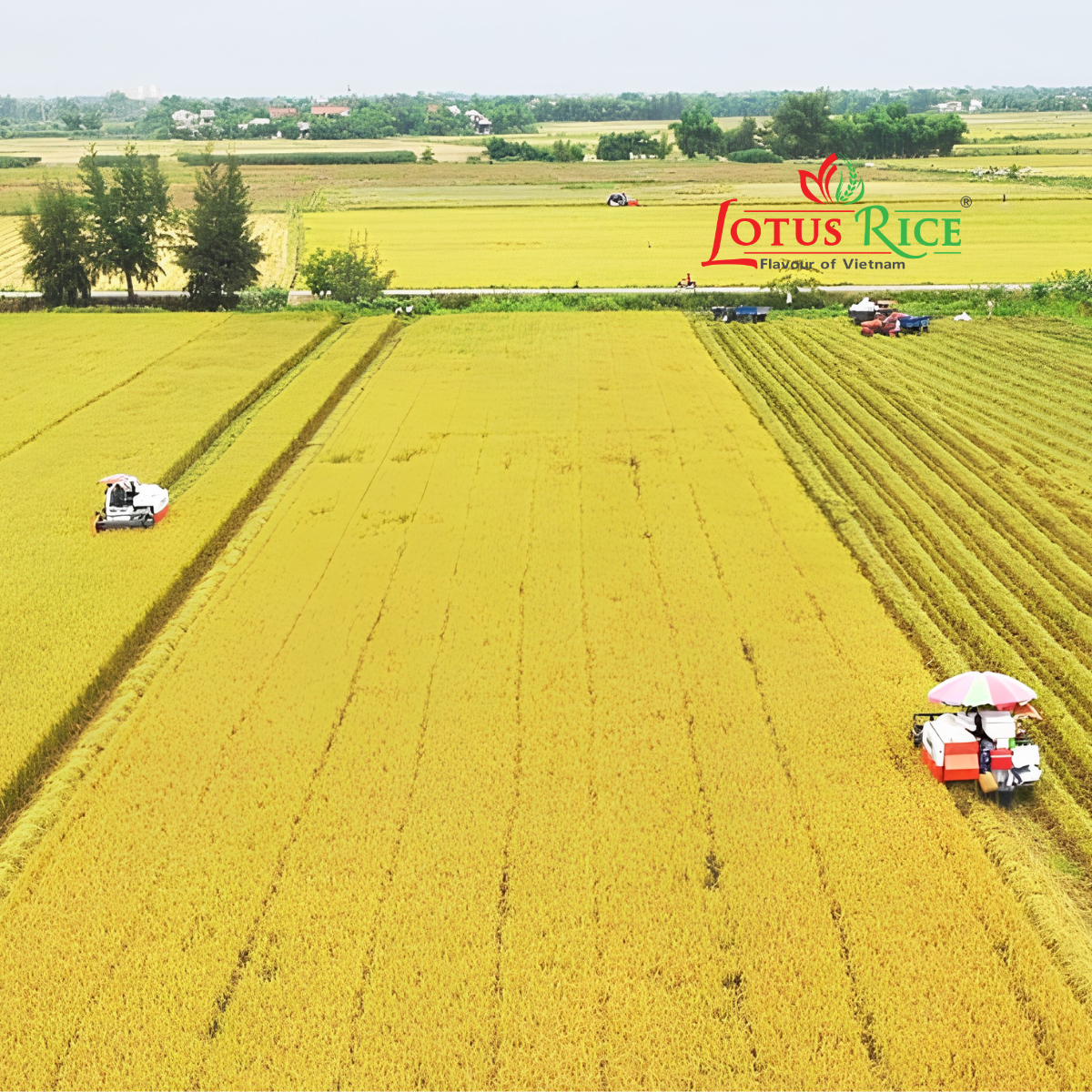
Harvest timing is the point where cultivation connects directly with post-harvest quality management. Farmers consider grain maturity, crop conditional and surrounding weather before determining when the field is ready.
The decision is not based on a calendar alone. It is informed by what farmers have observed throughout the season. Appropriate harvest timing helps establish the condition of the rice entering the next stage of the Lotus Rice quality chain.
Where Seasonal Experience Meets Responsible Practice
Vietnamese farmers bring practical knowledge developed through repeated seasons in the field. Responsible farming frameworks provide additional structure through training, resource management, and clearer cultivation practices.
Lotus Rice works with farming communities in the Mekong Delta to connect these strengths. Farmer experience remains central to field-level decisions, while SRP-oriented practices support a more systematic approach to water efficiency, crop protection and environmental responsibility.
This relationship allows local knowledge to develop alongside evolving market expectations. For international buyers, it creates a clearer connection between Vietnamese rice origin, responsible cultivation and the quality requirements applied after harvest.
Knowledge That Can Move Foward
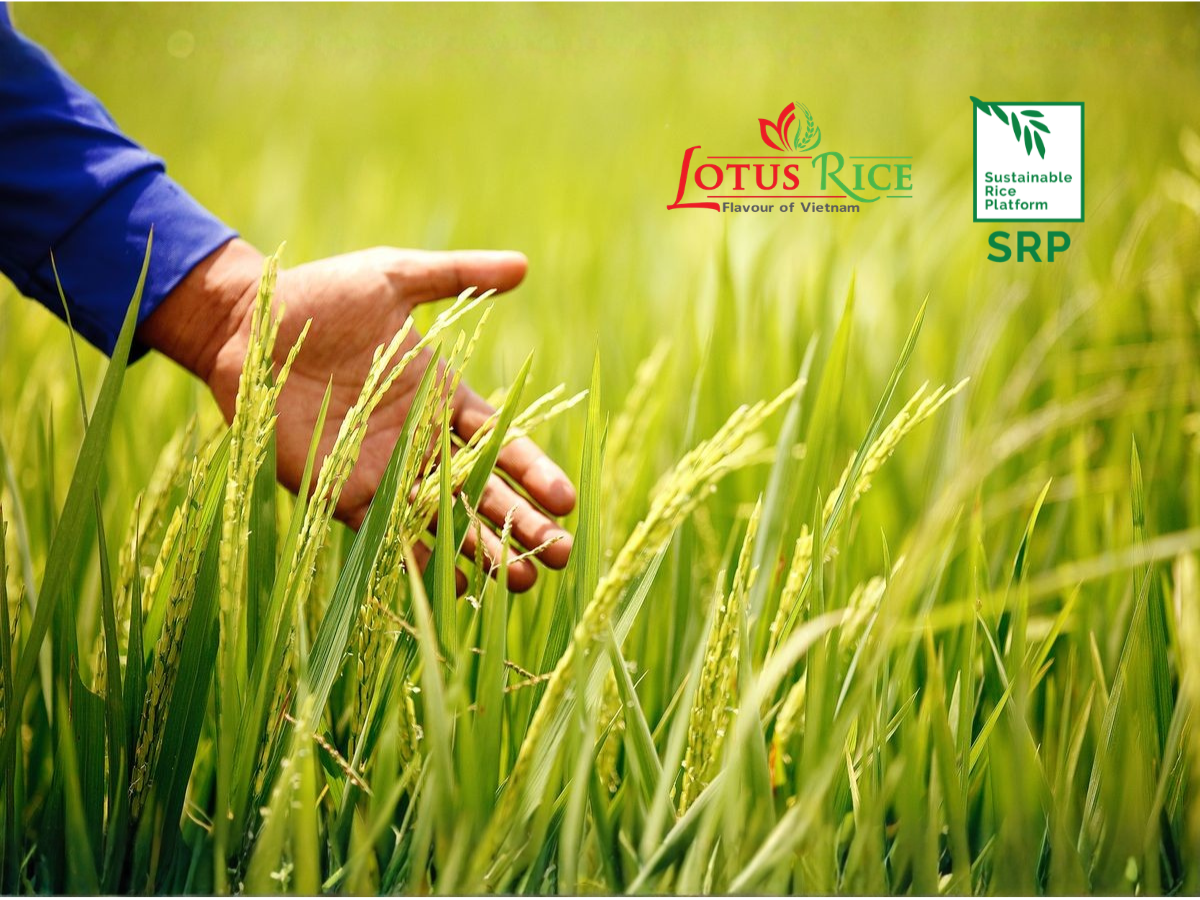
Agricultural knowledge is valuable when it can respond to new conditions. Changes in climate, water availability and market requirements mean that farming experience must continue to develop rather than remain fixed.
By combining seasonal knowledge with training and responsible practices, farmers can make more informed decisions while preserving their understanding of the local landscape. This is how Vietnamese farming wisdom continues to contribute to the future value of Vietnamese rice.
Why farmer Knowledge Matters to B2B Rice Buyers
For importers, distributors, retailers, and foodservice partners, farmer knowledge has practical value. The condition of rice entering production affects how effectively it can later be processed according to agreed requirements.
Careful field observation supports more informed crop management. Appropriate harvest timing contributes to stronger raw-material starting point. Responsible cultivation also gives buyers greater context about where rice comes from and how its quality journey begins.
This does not mean field experience replaces product specifications or factory controls. It means those controls are supported by a more considered foundation at origin. Farmer knowledge and professional processing are two connected parts of the same quality chain.
From Field Knowledge to Product Specifications
After harvest, Lotus Rice applies processing and quality controls to prepare rice for different buyer and market requirements. Cleaning, grading, color sorting, milling, metal detection, and packing address specific aspects of the finished product.
These controls continue the work that began in the field. The farmer shapes the natural starting condition of the grain; the processing system then manages that grain according to defined specifications. This connection gives the Lotus Rice quality chain both a human foundation and an operational structure.
Vietnamese Farmers Are Where the Quality Chain Begins
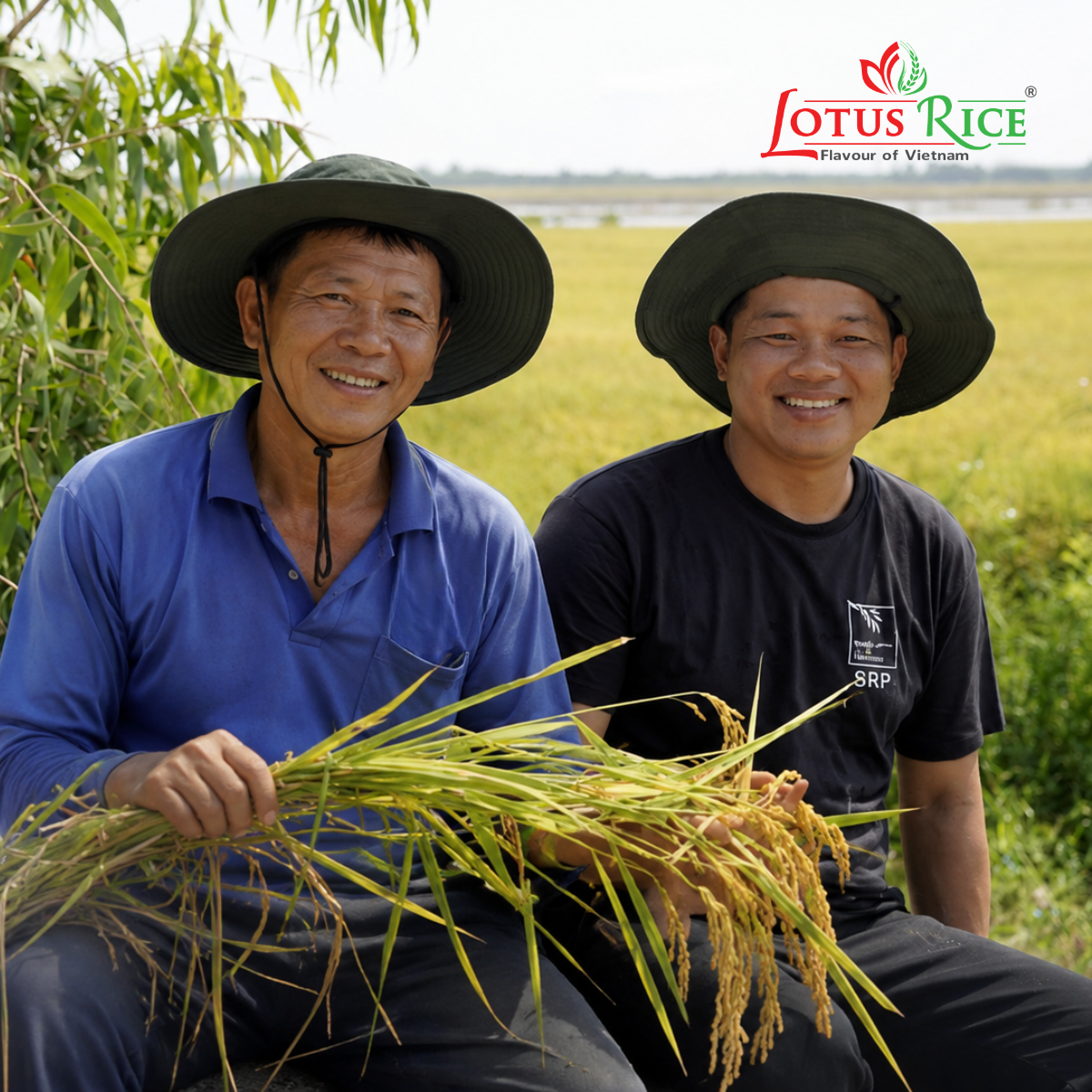
Every harvest carries the result of a season spent observing, adjusting and deciding when to act. Vietnamese farmers understand that rice cultivation is not a fixed set of tasks, but a relationship with a field that continues to change.
Their knowledge helps guide water management, crop care, and harvest timing. Their dedication contributes to the condition of the grain before processing begins. Their experience gives the Lotus Rice quality chain its first foundation.
For Lotus Rice, honoring Vietnamese farmers means recognizing their professional contribution to rice quality. They are not simply the people behind the harvest. They are the people whose knowledge helps Vietnamese rice more forward with greater value and trust.
Meet the people behind Lotus Rice .
LotusRice ResponsibleRice SustainableRice JasmineRice MekongDelta VietnameseRice
————————————
Website: https://www.lotusrice.vn/
Email: connect@lotusgroup.vn
WhatsApp: (+84 77) 6996 768
Phone: (+84 28) 3622 2236
Head office: No. 52, Street 10, Him Lam Residence, Tan Hung Ward, HCM